
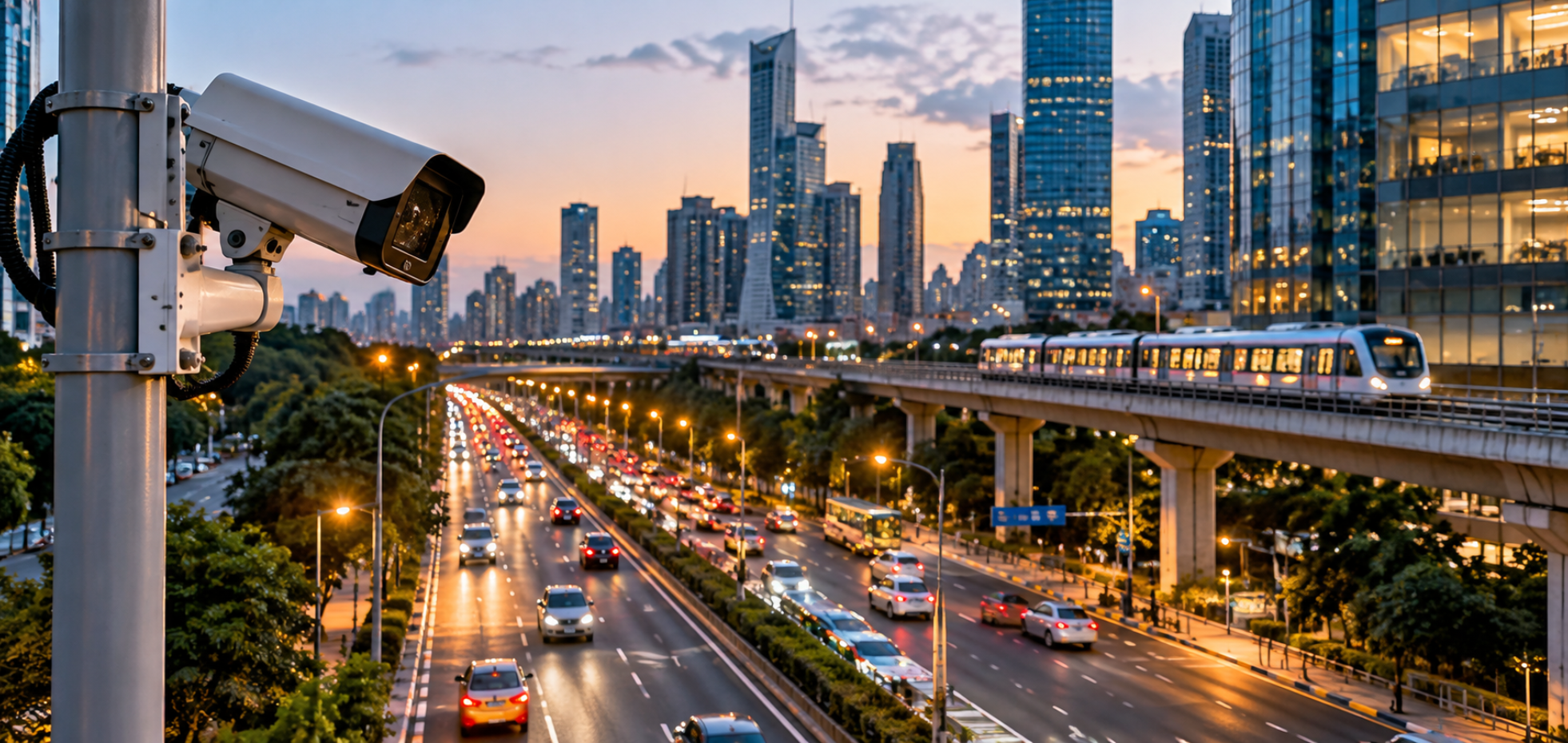
AI Video Analytics for Smart Cities: Features, Use Cases and Benefits
AI video analytics for smart cities uses artificial intelligence and computer vision to analyse live camera feeds, detect specific urban events, and provide alerts to the people responsible for public safety and city operations. Unlike traditional CCTV, which mainly records video for later review, AI video analytics can identify events as they happen. This can include traffic violations, road conditions, crowd activity, violence, stray animals, and unauthorized street activity. For city authorities, the main value is simple: cameras can do more than record. They can help identify what is happening and bring important incidents to the attention of the right teams faster. What Is AI Video Analytics for Smart Cities? AI video analytics is a technology that uses computer vision models to analyse video from surveillance cameras. The system can be configured to look for particular objects, activities, or conditions. When the system detects an event that matches a configured use case, it can generate an alert or report for the relevant authority. For example, cameras installed on city roads can be used to monitor traffic safety. Cameras in public areas can help monitor crowds or suspicious activity. Cameras covering roads and other urban spaces can also help identify road conditions or stray animals. The important difference is that the system is not simply storing footage. It is analysing the footage and turning video into useful information. This makes AI video analytics an important technology for smart city surveillance, public safety, traffic management, and urban operations. Why Do Smart Cities Need AI Video Analytics? Cities already have large networks of surveillance cameras. The problem is that having more cameras does not automatically mean having better visibility. A control room may receive video from hundreds or thousands of cameras. Human operators cannot continuously watch every feed with the same level of attention. An incident can happen in seconds. A traffic violation may occur between two manual observations. A crowd may grow quickly. An animal may enter a road. A road hazard may remain unnoticed until someone reports it. AI video analytics addresses this gap by continuously analysing configured camera feeds. It can help authorities: CivicEye is designed around this approach, using AI powered cameras and real time video intelligence to detect urban incidents, identify potential risks, and alert the appropriate authorities. How Does AI Video Analytics Work? The process is easier to understand when broken into a few practical steps. 1. Video Is Captured Existing or deployed surveillance cameras capture video from roads, intersections, public spaces, and other monitored areas. 2. AI Analyses the Video Computer vision models process the camera feed and look for the objects, activities, or conditions relevant to the deployment. The system does not need to treat every frame as a separate manual review. AI models continuously analyse the incoming video based on their configured detection capabilities. 3. An Event Is Detected When the system identifies an event that matches a configured rule, it can classify the event. For example, a deployment may be configured to identify a traffic violation, crowd activity, road issue, stray animal, or unauthorized activity. 4. An Alert Is Generated The detected event can be reported to a control centre or authorised official. CivicEye supports real time reporting for incidents such as road hazards, unauthorized street vendors, and suspicious activities. 5. Authorities Take Action The final decision and response remain with the responsible authority. AI provides information and alerts. City teams can then assess the situation and follow the appropriate response process. This distinction is important. AI video analytics supports public safety teams. It does not replace the people responsible for making operational decisions. Key Features of AI Video Analytics for Smart Cities A smart city video analytics platform can provide several capabilities depending on the city’s requirements. Real Time Monitoring AI can continuously analyse video from roads, public spaces, and other urban locations. This gives city authorities a more consistent view of monitored areas without requiring an operator to manually watch every camera feed. CivicEye provides real time monitoring across urban environments as one of its core capabilities. Automated Incident Detection Instead of waiting for an operator to notice an event, AI can identify configured incidents automatically. This is useful for repetitive monitoring tasks where specific conditions need to be detected across a large camera network. Real Time Alerts An AI system becomes much more useful when detection is connected to an alert mechanism. When an event is detected, the relevant information can be sent to a control centre or authorised personnel. This helps reduce the gap between an incident happening and the authority becoming aware of it. Mobile Access Urban incidents do not always happen when officials are sitting inside a control room. CivicEye supports mobile notifications so that relevant updates can reach officials on their mobile devices. This can help field teams stay informed while moving between locations. Predictive Insights Video analytics can also help authorities identify recurring issues and patterns. For example, repeated incidents in a particular area may indicate a need for additional monitoring, enforcement, infrastructure work, or other intervention. CivicEye includes predictive insights as part of its platform capabilities. Scalable Design Every city has different requirements. A platform may need to support a small number of critical locations initially and expand as the city’s monitoring needs increase. CivicEye is designed to support different urban monitoring requirements across roads, public spaces, and other critical areas. Comprehensive Urban Monitoring Smart city surveillance is not limited to traffic. A broader AI video analytics system can support road safety, public safety, road condition monitoring, crowd monitoring, stray animal detection, and unauthorized street activity. This makes the same technology relevant across multiple city operations. AI Video Analytics Use Cases for Smart Cities The real value of AI video analytics becomes clearer when we look at practical applications. 1. Traffic Violation Detection Traffic safety is one of the most important applications of AI video analytics. City authorities can use computer vision to monitor specific traffic violations without relying entirely on manual observation.