
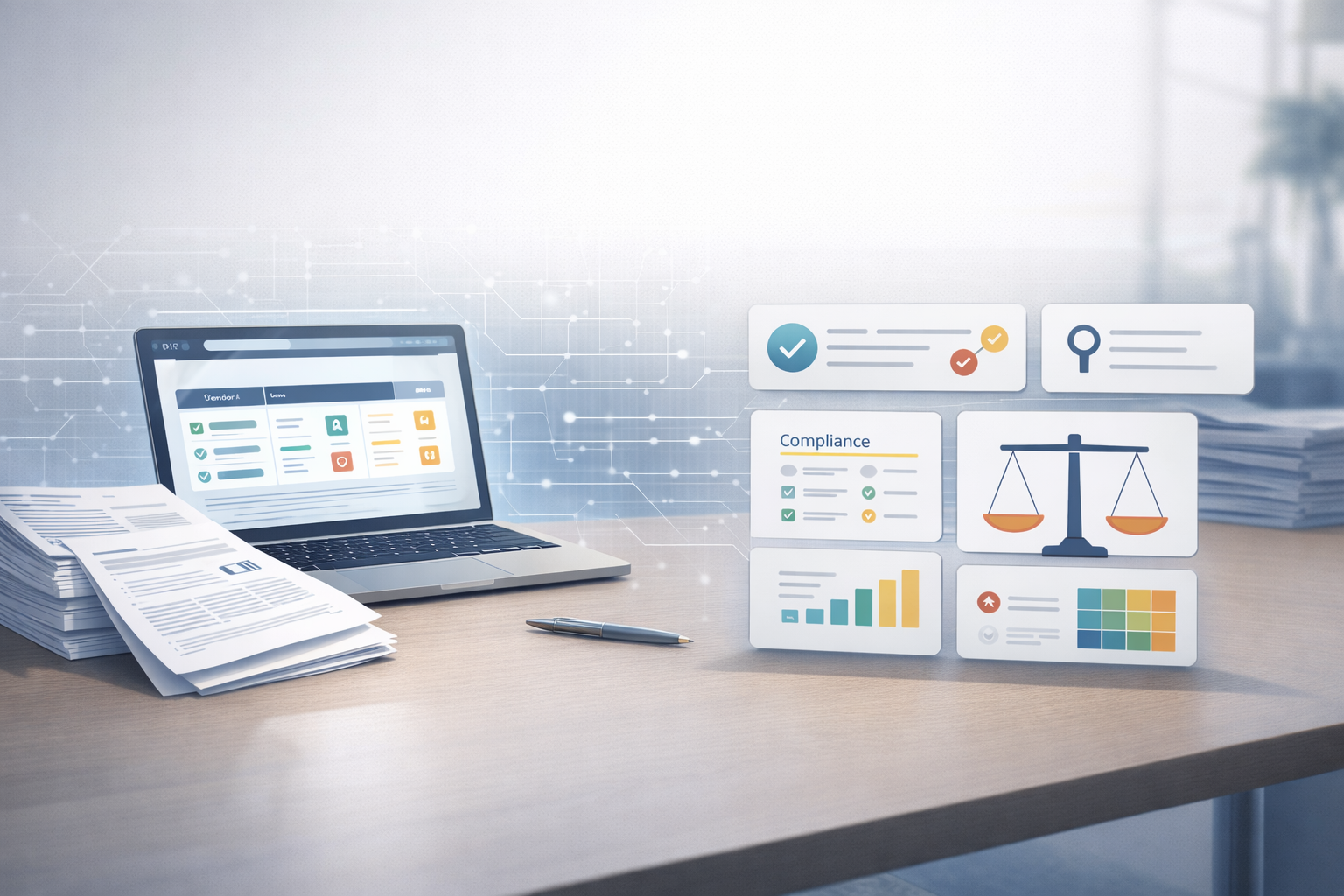
The Quiet Reinvention of Public Procurement: Intelligence, Not Interfaces, Will Shape the Next Era of Governance
A narrative essay for public sector transformation leaders There are few government functions as invisible to citizens — and yet as critical to a nation’s progress — as public procurement. It is a machine room of governance: silent, procedural, and rarely romanticized. But behind every flyover, school meal programme, rural health centre, patrol vehicle, drinking water supply scheme, or state-wide technology platform, lies one simple administrative truth: Someone had to evaluate a tender. Someone had to choose. For years, procurement officials around the world have carried out this responsibility with a mixture of diligence, pressure, and extraordinary manual effort. The move to e-procurement in the last decade was a step forward: tenders were digitized, submissions were online, transparency improved, and workflows became traceable. But digitization, as it turns out, solved only the surface of the problem. Because the real challenge — the one everyone inside government quietly admits — is not submission.It is interpretation. It is reading hundreds or thousands of pages of scanned PDFs.It is comparing technical specifications that span disciplines.It is catching the difference between a compliant clause and a nearly compliant one.It is weighing risks that are buried in annexures.It is ensuring fairness, consistency, and traceability under the watch of audit.It is doing all of this with shrinking timelines, expanding compliance norms, and rising public expectations. Procurement, in other words, has hit its cognitive ceiling. And that is why the most meaningful transformation unfolding in procurement today is not digital — it is intelligence-driven. The Shift Has Already Begun — Quietly, Globally, and Irreversibly If you look closely at public-sector policy papers around the world, you begin to notice a pattern. The OECD’s 2023 Government at a Glance report observed that procurement authorities are grappling with “growing complexity that requires multidisciplinary expertise.” The World Bank calls modern procurement “a knowledge profession with increasing analytical demands.” GovTech Singapore has published guidance on the use of AI for clause extraction and compliance support. The UK Cabinet Office’s Transforming Public Procurement (TPP) reform places strong emphasis on structured information, evaluation consistency, and evidence-based justifications. None of these documents say it directly. But they all imply the same message: The current model of procurement cannot scale unless decision-making becomes more intelligent, not more digitized. The era of interfaces is giving way to the era of intelligence. Procurement Was Never a Document Problem — It Was Always a Thinking Problem Walk into any government evaluation committee room, and the scene is always familiar: Stacks of printed documents.USB drives with bidder submissions.Scanned PDFs that OCR tools cannot read cleanly.Technical specifications that demand engineering, legal, financial, and sectoral understanding at once.A deadline that is already too tight.And a responsibility that feels heavier each year. Procurement officials don’t suffer from a technology gap.They suffer from a cognitive overload gap. Digitization made documents accessible.But it did not make them understandable. And this, quietly, is where AI is beginning to reshape procurement — not through flashy headlines, but through small, meaningful shifts: These capabilities are not futuristic.They are already being explored by governments in the EU, Singapore, South Korea, the UAE, and increasingly in India. What they collectively signal is this: Procurement is moving from document-driven workflows to intelligence-driven decision systems. The New Architecture of Procurement: Subtle, Not Radical When people imagine AI in government, they often picture automation, robotics, or AI replacing human judgment.But the real transformation in procurement is far more nuanced. The next era of procurement — already emerging in pockets — is built around five shifts: 1. AI-Assisted Evaluation The needle moves from reading to reasoning.** Instead of wading through thousands of pages, evaluators begin with: It is not automation.It is cognitive amplification. Governments in Europe are piloting machine-readable procurement standards for this reason. 2. Explainable Scoring Every score carries a story — and evidence. Audit bodies globally want to know why a vendor got a particular score. AI does not eliminate human scoring.It illuminates it. By showing: This drives consistency — the Achilles’ heel of manual evaluation. 3. Predictive Risk Intelligence Procurement shifts from hindsight to foresight. Imagine knowing: Risk signals like these are already being generated in advanced procurement ecosystems worldwide. This is not prediction for prediction’s sake.It is proactive governance. 4. Knowledge-Led Drafting Institutional memory becomes machine-accessible. Every procurement officer knows this reality:The quality of a tender depends heavily on who drafted it. Knowledge systems — informed by historical tenders, audit recommendations, policy frameworks, contract outcomes — can now assist in drafting tenders that are: This reduces disputes, re-tendering, and project delays. 5. Continuous Compliance Compliance becomes a living, breathing layer — not a checklist. As procurement regulations evolve — from GFR to ESG norms to vigilance requirements — compliance must be checked: Organizations like the World Bank have explicitly called for continuous integrity safeguards in procurement systems. AI makes this possible by constantly monitoring for violations, gaps, or mismatches. The Public Sector’s Real Challenge: Preparing People, Not Systems The most successful public-sector reforms understand this:Technology only works when institutions are ready for it. The intelligence era of procurement will require: New skillsNot technical skills — interpretive skills.How to read what AI produces.How to cross-check it.How to validate decisions with evidence. New governance normsProcurement must remain transparent, accountable, explainable.AI must not obscure decisions — it must illuminate them. New confidenceOfficers need to trust that AI is not a threat to their role, but a reinforcement of their professional judgment. New documentation cultureProcurement must become structured, searchable, and knowledge-rich — not scattered across PDF archives. This is where leadership matters.Not just technology deployment. The Future: Not 2030. Not 2040. But Now, and Next. When will this transformation arrive? It already has — in fragments.It is arriving in state governments experimenting with evaluation support systems.In ministries running pilots on document intelligence.In audit bodies asking for stronger evidence trails.In global policy papers calling for capability uplift.In procurement officers who know that reading 3,000 pages in a week is no longer sustainable. The future is not a deadline.It is a direction. And the