

A loss of control in digital systems doesn’t always begin with a breach; it often starts quietly with dependency. As India rapidly scales platforms like Aadhaar, UPI, and digital health systems, a significant share of AI capabilities and data processing still depends on external infrastructure and global technology providers. What begins as faster innovation gradually raises concerns around where data is processed, who controls it, and how decisions are made.
This is the reality of India’s AI ecosystem.
Today, AI systems operate across vast, interconnected environments where financial networks, identity platforms, healthcare systems, and governance infrastructures function simultaneously. In such conditions, early warning signs like external data exposure, limited visibility into AI decisions, and dependency on foreign infrastructure are difficult to detect.
The challenge is not just AI adoption, but control over how AI operates, where data resides, and how intelligence is generated. At India’s scale, this gap impacts privacy, national security, and public trust driving the shift toward Sovereign AI systems.
The Growing Challenge in India’s AI Ecosystem
Across the country, AI is becoming central to economic growth, governance, and public service delivery. India’s digital economy is expected to contribute nearly one-fifth of national income by 2029–30, driven by large-scale adoption of data and AI systems.(https://www.pib.gov.in/FactsheetDetails.aspx?Id=149096®=3&lang=2)
At the same time, this growth is increasingly dependent on external ecosystems.
Many AI systems across sectors are built on global platforms by organizations like OpenAI, Google, and Meta often designed for different regulatory, cultural, and operational contexts.
This creates a fundamental challenge: AI systems may not fully align with India’s needs,Data may be processed outside national boundaries,Control over critical infrastructure becomes limited.
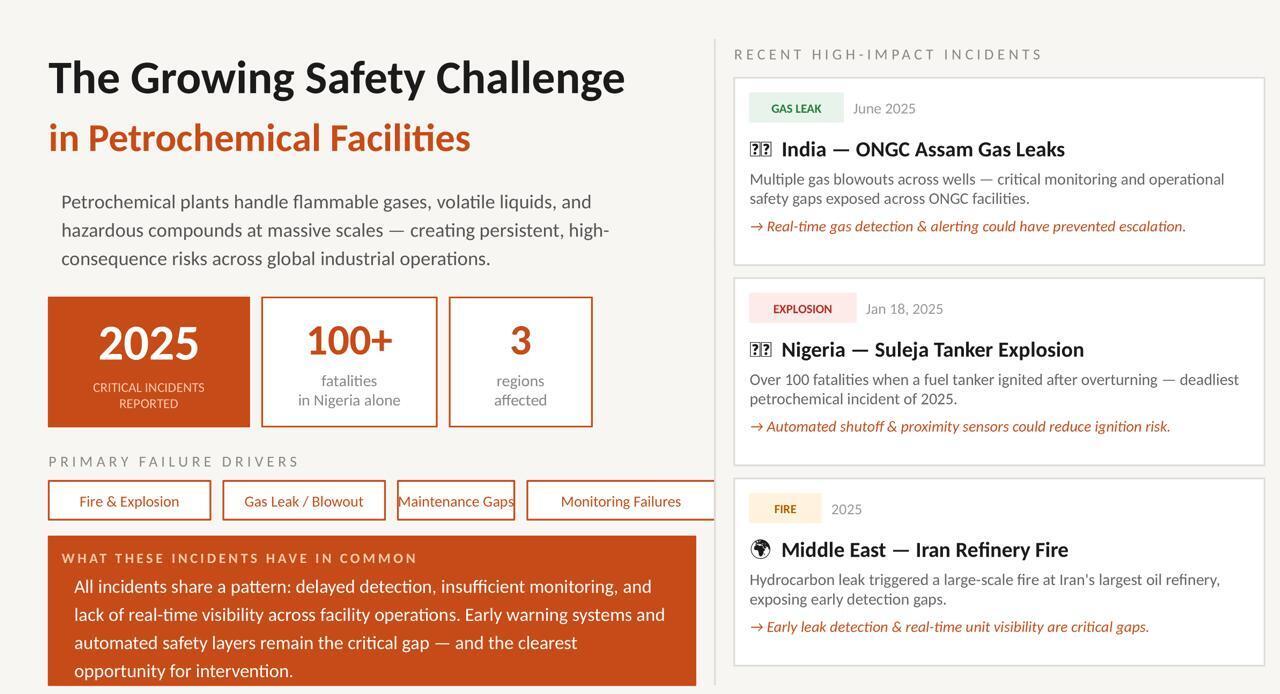
Recent developments highlight how serious these risks have become.
Some of the most critical realities include:
These are not isolated challenges. India is managing one of the world’s largest digital ecosystems while rapidly accelerating AI adoption across sectors, making real-time visibility and control increasingly difficult.
The real challenge lies in identifying critical moments within massive data volumes unauthorized access, system misuse, or external exposure and acting on them in time.
Limitations of Traditional and Current AI Systems
Today’s AI relies heavily on legacy infrastructure, cloud platforms, and third-party tools. They scale but come with major limits in India’s ecosystem:
- Fragmented visibility: Banking, healthcare, governance, and identity data sit in silos.
- External dependency: AI models often run on foreign-controlled environments, cutting sovereignty.
- Opaque decisions: Many systems operate as black boxes.
- Slow risk detection: Unauthorized access or anomalies are spotted too late.
- Privacy gaps: DPDP Act frameworks exist, but enforcement is inconsistent.
In short: AI adoption is possible, but control is not.
Current Realities Across Sectors
AI adoption in India presents a mixed picture:
- Banking and Financial Services: More than 75% of banks have deployed AI-powered systems, particularly for customer service and operations.(https://www.bis.org/review/r250924a.pdf)
- Healthcare Access Gaps: Only around 9% of rural populations have used telemedicine, highlighting uneven access. (https://www.trif.in/wp-content/uploads/2024/05/State-of-health-in-Rural-India.pdf)
- Digital Health Growth: Around 23% of citizens have ABHA accounts, with growing awareness but limited deep usage.
(https://www.trif.in/wp-content/uploads/2024/05/State-of-health-in-Rural-India.pdf) - Agriculture Constraints: AI solutions exist, but must adapt to low bandwidth, regional languages, and on-ground realities.
These realities highlight a clear imbalance: strong AI capability, but uneven accessibility, control, and scalability.
The Talent and Workforce Challenge
India’s demographic advantage is significant around 65% of the population is under 35
(https://www.pib.gov.in/FactsheetDetails.aspx?Id=149107®=3&lang=2),
AI market projected to reach $17 billion by 2027
(https://www.reuters.com/technology/indias-ai-market-seen-touching-17-bln-by-2027-notes-nasscom-bcg-report-2024-02-20/?utm_source=chatgpt.com),Over 400,000 professionals already working in AI roles, However, demand for AI talent is expected to exceed 1.25 million by 2027, creating a major gap.(https://www.deloitte.com/in/en/about/press-room/bridging-the-ai-talent-gap-to-boost-indias-tech-and-economic-impact-deloitte-nasscom-report.html)
Without large-scale reskilling and workforce alignment, this gap can slow down progress and increase dependency on external expertise.
Key Challenges Without Sovereign AI
As AI adoption grows without full control, several issues persist:
- Loss of data sovereignty: Sensitive data may be processed outside national boundaries.
- Limited control over AI systems: External dependencies reduce transparency and flexibility.
- Missed early warning signals: Subtle risks often go undetected.
- Operational inefficiencies: Teams focus more on managing systems than understanding them.
- Trust deficit among citizens: Privacy and misuse concerns slow adoption.
These challenges highlight the need for a more controlled, transparent, and accountable approach to AI.
How Sovereign AI Addresses These Challenges
What India needs today is not more AI, but AI it fully owns and controls.
Sovereign AI shifts the focus from simply using intelligent systems to governing and understanding them in real time.
Instead of asking, “Is the system working?” organizations can ask:
“Where is the data being processed?”
“Who is accessing critical systems?”
“Are AI decisions transparent and explainable?”
This shift enables:
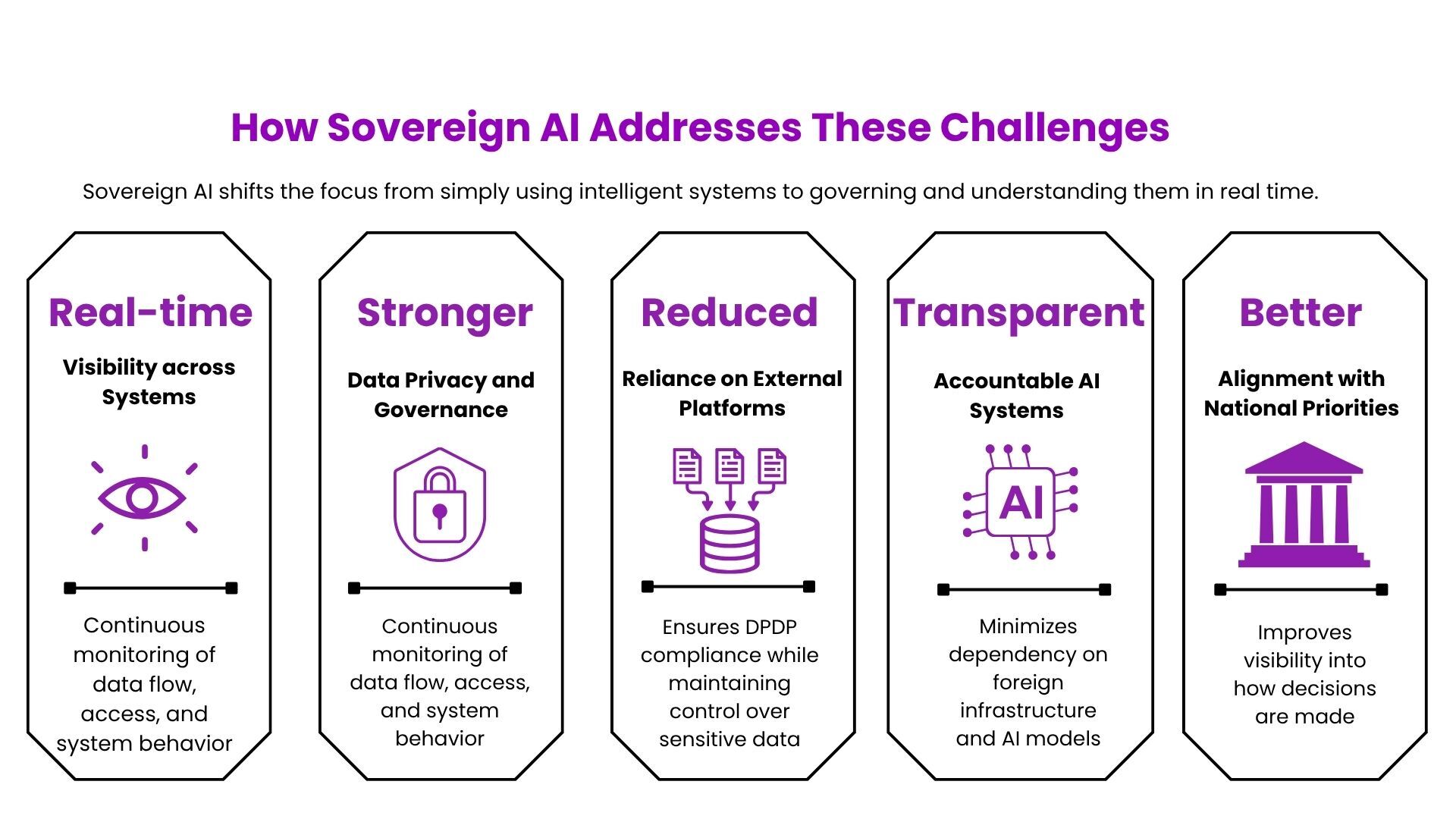
This reflects a broader shift from AI adoption to AI ownership.
Why Sovereign AI Matters
Critical sectors like Digital identity, banking, healthcare, agriculture, national security all demand complete control. Even small gaps can trigger large-scale fallout.
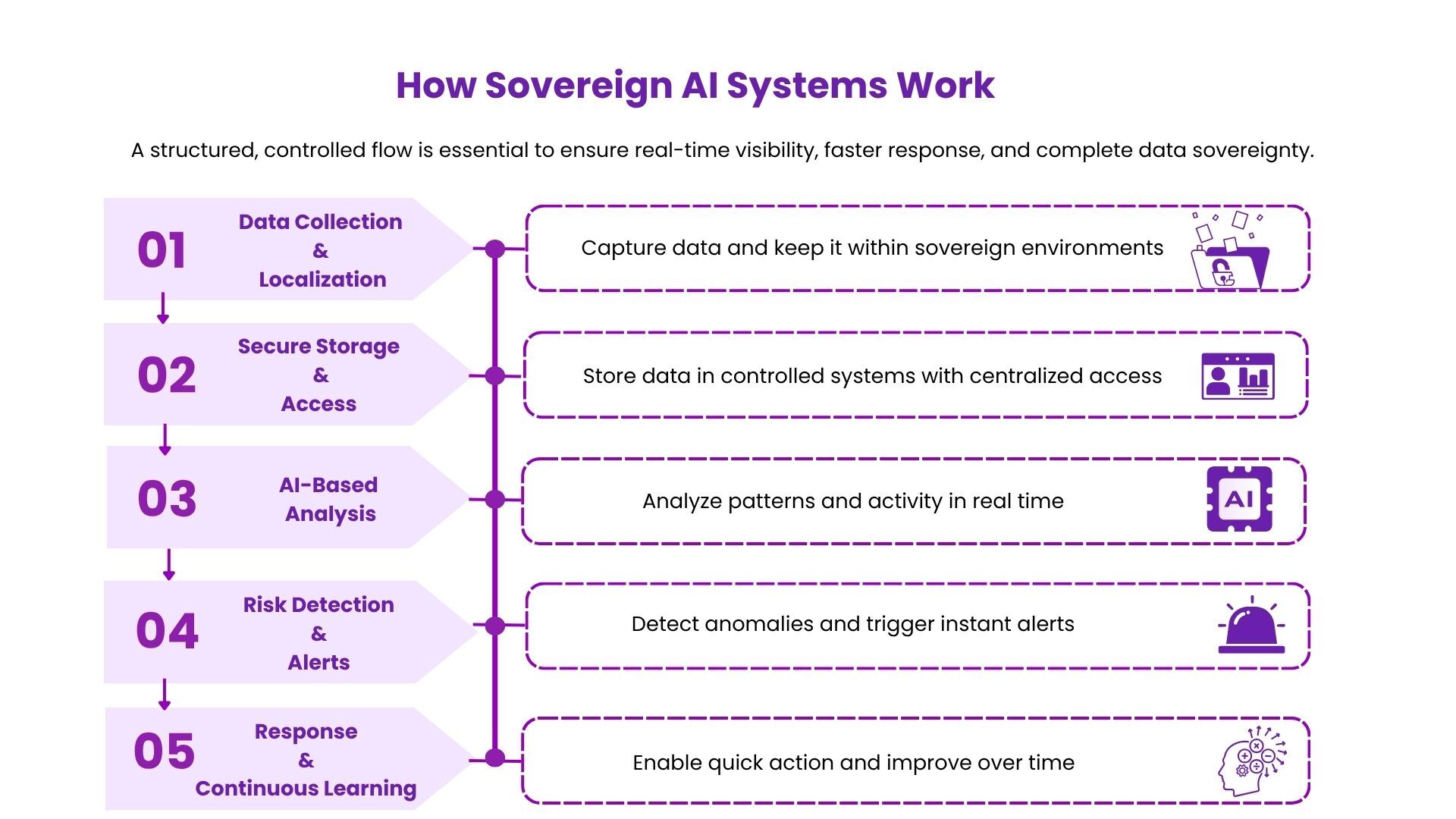
How Sovereign AI Systems Work
In large-scale government ecosystems, AI systems process millions of data points daily across identity, finance, and public services.
Enabling Sovereign AI with Valiance Solutions
Building Sovereign AI requires more than infrastructure; it requires intelligent systems designed for control, scale, and trust.
Valiance Solutions enables governments and enterprises to deploy AI systems that are:
- Secure and privacy-first
- Built for controlled environments
- Capable of real-time monitoring and intelligence
- Scalable across large, complex ecosystems
By transforming fragmented systems into connected intelligence layers, Valiance helps organizations move toward trusted, sovereign AI ecosystems.