

April 9, 2026

Uncategorized

Beyond Detection: AI-Powered Video Intelligence Against Deepfake Fraud

A deepfake scam doesn’t start with a glitch, it starts with trust. In February 2024, a finance employee at a multinational firm in Hong Kong authorized $25 million across 15 transfers after attending what appeared to be a legitimate video call with senior executives. Every participant on the call except the employee was a deepfake.(https://www.weforum.org/stories/2025/01/deepfakes-different-threat-than-expected/)  By 2026, deepfake phishing will spread across industries. Fraud attempts surged by 3,000% in 2023, deepfake incidents increased 10x year-over-year, and files are projected to grow from 500,000 in 2023 to 8 million in 2025, a 900% annual surge.(https://keepnetlabs.com/blog/deepfake-statistics-and-trends)  In India, during the 2024 general elections, deepfake attempts surged 280% year-on-year, and over 75% of Indians reported exposure to synthetic political content, including manipulated videos and cloned voices.(https://www.aicerts.ai/news/how-political-misinformation-deepfakes-threaten-2026-elections/)  Deepfakes are no longer experimental tools. They are widely accessible, fast to produce, and capable of spreading across platforms within minutes. The challenge today is not just identifying fake content but verifying authenticity in real time before damage is done. The Deepfake Surge: A Rapidly Expanding Attack Surface Deepfake threats are accelerating across industries: Financial systems, crypto platforms, enterprises, and public institutions are increasingly targeted. But the bigger issue is structural: Most video systems still store footage without interpreting it. (https://keepnetlabs.com/blog/deepfake-statistics-and-trends) The Growing Challenges of Synthetic Media Digital ecosystems now process massive volumes of visual and audio content daily across elections, finance, media, and enterprise communications. Within this scale, synthetic media threats are expanding rapidly. The challenge is not only the scale, it is identifying subtle manipulation signals within vast media volumes before misinformation escalates. Limitations of Traditional Approaches Traditional detection methods rely heavily on manual checks and visible inconsistencies. In high-volume environments, these approaches face structural gaps: Traditional systems help react. They do not reliably prevent. Current Realities of Deepfake Threats The modern threat landscape presents operational challenges: Even advanced AI detection tools lose 45–50% effectiveness in real-world conditions.The gap isn’t camera coverage: It’s intelligence.(https://keepnetlabs.com/blog/deepfake-statistics-and-trends)  AI-Powered Deepfake Detection and Filtering Modern AI systems move beyond visual inspection by analyzing multiple signals simultaneously. This approach shifts detection from surface-level inspection to intelligent pattern interpretation at scale. Why It Matters Deepfakes now target financial approvals, political communication, executive impersonation, biometric authentication, and public platforms. 77% of victims targeted by voice cloning report financial loss. Over 50% of enterprises have faced AI-driven fraud attempts. When synthetic content becomes indistinguishable from reality, traditional verification collapses. Real-time interpretation becomes the only scalable defense. How AI-Powered Deepfake Detection Works In a typical deployment, intelligent AI layers work together to analyze and act on media in real time. Result: Observe. Analyze. Filter Early. Where AI Filtering Matters Most In these environments, even seconds of undetected synthetic content can create outsized impact. The Future of deepfake defence Deepfake defense is not just about detection accuracy. It is about: Surveillance must evolve from visibility to foresight. Valiance Solutions is making surveillance intelligent and solving one of the world’s biggest blind spots turning systems into intelligent, predictive defense infrastructure.
Uncategorized

Industry 4.0 Meets Sustainability: India’s Cognitive Manufacturing Imperative

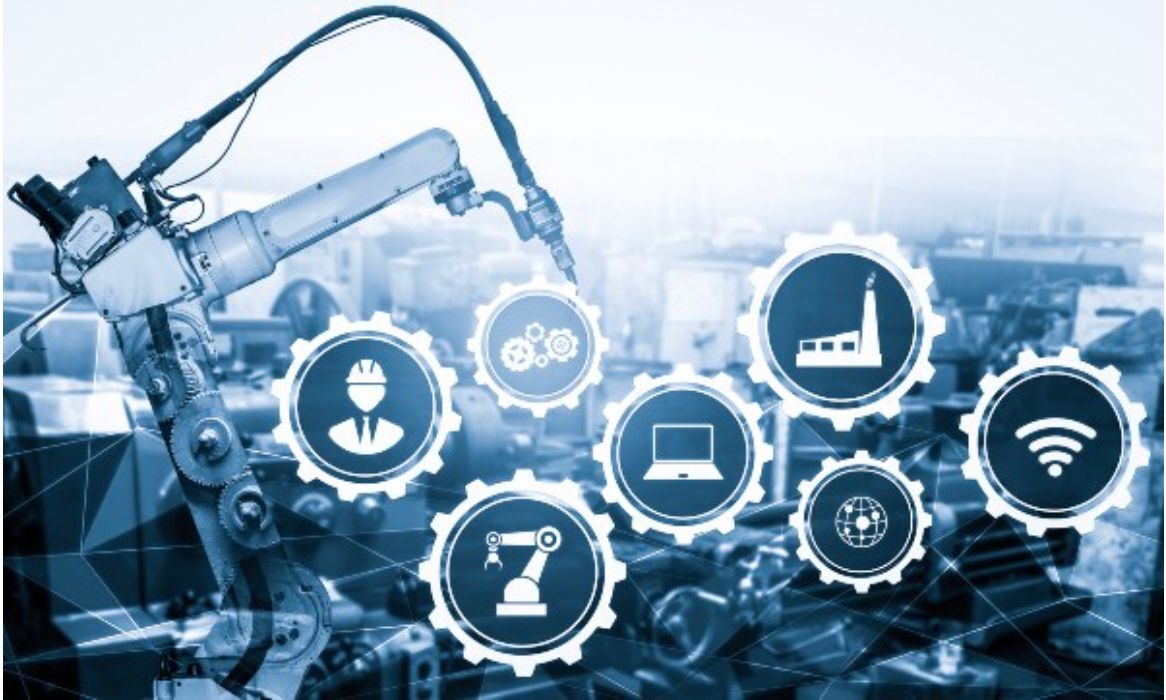
A factory doesn’t lose competitiveness in one dramatic moment.It loses it quietly at the point of compliance. In early 2026, an Indian manufacturer exporting to Europe was asked to submit verified emissions data under tightening EU Carbon Border Adjustment Mechanism (CBAM) norms. Production was stable. Orders were strong. But carbon data had to be manually compiled from energy logs and plant records. What should have been instant visibility turned into weeks of reconciliation. The issue wasn’t output.It was traceable. As global markets begin tying trade access to verified carbon disclosure, productivity alone is no longer enough. For Indian manufacturers, competitiveness now depends on real-time, auditable sustainability intelligence not retrospective reporting. This is the new industrial reality: scale without intelligence is risk. The Growing Industrial Challenge: Scale vs Sustainability India aims to grow manufacturing to $1 trillion by 2030, targeting ~25% contribution to GDP. At the same time, it has committed to reducing emissions intensity of GDP by 45% by 2030 (from 2005 levels) under its climate commitments.(https://www.pib.gov.in)  These goals are not separate. They collide directly on the factory floor. The Pressure Is Real Meanwhile: The challenge is no longer just productivity.It is productivity with traceability, resilience, and carbon accountability. And traditional automation alone cannot solve this. Where Traditional Industry Falls Short Industry 4.0 digitized operations but digitization is not cognition. Common structural gaps include: In simple terms: Factories measure output but they do not continuously optimize it. This is where cognitive manufacturing becomes critical. Current Realities: The Gap in India’s Manufacturing Today India’s factories are rapidly adopting Industry 4.0, but most remain digitized, not cognitive. The challenge isn’t data it’s turning data into sustainable action: Automated and connected but not cognitive. Scale + sustainability demand cognitive manufacturing. Key Challenges Without Cognitive Manufacturing When intelligence is not embedded into operations, several challenges persist: Even small inefficiencies when multiplied across high-volume production significantly affect cost structures and emissions profiles. These challenges are pushing the industry toward a more intelligent approach. How Cognitive Manufacturing Supports Sustainable Industrial Growth Cognitive manufacturing shifts factories from rule-based automation to adaptive intelligence. Instead of asking: “Did we meet production targets?” Organizations begin asking: “Why did energy intensity increase this week?”“Which variables influenced scrap rates?”“How will this scheduling decision affect emissions output?” Cognitive systems enable: The shift is clear: From monitoring to interpreting, From reacting to anticipating, From reporting to optimizing Where Cognitive Manufacturing Matters in Industrial Operations Intelligent systems create impact across critical operational zones: Even marginal improvements across these areas significantly enhance both profitability and sustainability. How Cognitive Manufacturing Systems Work In a typical implementation, multiple processes work together: Result: Factories move from static execution to adaptive performance. Valiance Solutions: Cognitive Manufacturing Intelligence Platform Valiance Solutions enables manufacturers to transform existing production and monitoring infrastructure into intelligent, self-optimizing industrial ecosystems through AI-powered cognitive manufacturing. The platform is designed for deployment across discrete and process industries, multi-plant environments, MSME clusters, and export-driven manufacturing ecosystems. Core Capabilities India’s industrial ecosystems are expanding. Sustainability expectations are tightening. Global compliance standards are evolving.

Uncategorized

AI-Powered Vision Monitoring for Industrial Emissions: From Periodic Checks to Real-Time Environmental Intelligence

A plume of smoke rising from an industrial stack rarely triggers alarm.It blends into the skyline. It fades into the air. But environmental risk doesn’t disappear just because it’s invisible. Over the past decades, environmental laws have grown stricter. Compliance frameworks have expanded. Continuous Emission Monitoring Systems (CEMS) have been mandated. On paper, oversight looks robust. In practice, it is often less so. In 2023, India’s pollution control authorities flagged multiple industrial units for exceeding emission norms despite having installed CEMS infrastructure. In several instances, systems were offline, under calibration, or failing to transmit consistent real-time data. By the time inspections confirmed discrepancies, the emissions had already dispersed into surrounding communities. This is the operational gap in industrial sustainability. Factories do not pause. Boilers ignite before sunrise. Furnaces discharge exhaust every minute. Industrial stacks release gases in continuous streams not in reporting intervals. Yet environmental monitoring frequently remains periodic, fragmented, or reactive. The issue is no longer the absence of regulation. Nor is it the absence of hardware. It is the absence of real-time interpretation. Because in environmental compliance, delay does not just postpone action it changes impact. Industrial sustainability is now moving beyond simply measuring emissions.The future lies in understanding them as they happen. The Growing Environmental Challenge in Industrial Operations Industrial emissions remain a major global risk driver economically, environmentally, and socially. The pressure is multidimensional: Environmental health risk, Economic liability, Regulatory tightening, Global trade accountability. Monitoring can no longer be occasional. It must be continuous and defensible. Limitations of Traditional Emission Monitoring Systems Most industrial facilities depend on a combination of CEMS, manual sampling, periodic inspections, and environmental audits. Common limitations include: Traditional systems record values. They rarely interpret behavior. Current Realities in Industrial Emission Oversight Key Challenges Without Intelligent Monitoring Without AI-assisted visual interpretation, industries face: Industrial sustainability now requires early awareness, not post-event validation How Vision AI Transforms Industrial Emission Monitoring Vision AI introduces continuous visual cognition across industrial environments. Instead of relying solely on numeric thresholds, systems analyze emission behavior patterns in real time. Key transformation points include: Monitoring shifts from reactive measurement to proactive intelligence. Where Intelligent Emission Monitoring Matters Most High-risk emission points across industrial facilities include combustion units, cement kilns, steel furnaces, chemical processing stacks, material transfer systems, and waste incineration zones. In these areas, even brief deviations in plume density or exhaust behavior can indicate combustion inefficiencies, equipment malfunction, or non-compliant discharge patterns. Continuous visual intelligence ensures that such deviations are detected as they emerge not after environmental exposure spreads. How a Vision AI–Based Emission Monitoring System Works A structured process flow enables real-time intelligence: Result: Observe. Interpret. Act  in real time. Platform Capabilities – Valiance Solutions Valiance Solutions enables industries to transform existing surveillance infrastructure into proactive environmental intelligence systems through AI-powered video monitoring. The platform is designed for deployment across manufacturing plants, steel facilities, cement units, logistics corridors, and large industrial clusters. Future-ready environmental monitoring systems will focus on: Industrial ecosystems are expanding. Sustainability frameworks must evolve alongside them. Moving from delayed reaction to early awareness. At Valiance Solutions, we help industries transform existing surveillance infrastructure into proactive environmental intelligence ecosystems through AI-powered video analytics. Environmental protection should not depend on reviewing reports after pollution spreads.It should depend on identifying deviation as it unfolds. Because progress is not measured by the number of sensors installed.It is measured by how quickly emissions are understood and how effectively they are prevented.

Scroll to Top