
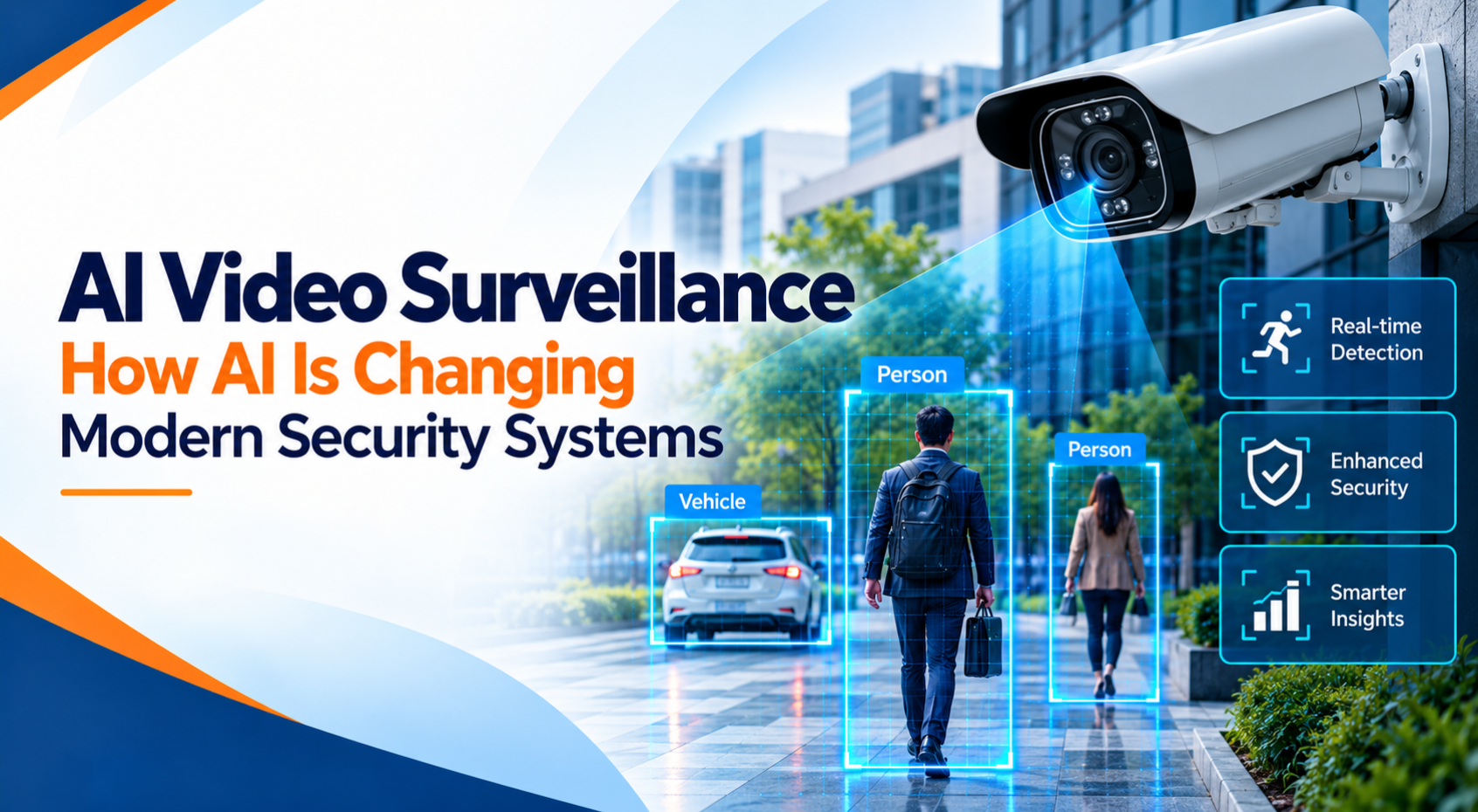
AI Video Surveillance: How AI Is Changing Modern Security Systems
Traditional CCTV cameras record what happens. AI video surveillance goes one step further by analysing video feeds and identifying events as they happen. An AI video surveillance system can detect people, vehicles, objects, movements and specific activities in a camera feed. When the system identifies an event that needs attention, it can send an alert to the relevant team. This helps security and operations teams act faster instead of spending hours watching screens or searching through recorded footage. This is changing the role of CCTV in factories, warehouses, ports, construction sites, oil and gas facilities, public spaces and other large environments. Modern AI video surveillance can also work with existing camera infrastructure. This means organizations do not always need to replace their current CCTV network to add AI based monitoring. GuardVision AI, for example, is designed to work with existing cameras and can turn an existing CCTV setup into a real time video intelligence system. What Is AI Video Surveillance? AI video surveillance is a security and monitoring system that uses artificial intelligence and computer vision to analyse video from cameras. A normal CCTV system mainly records video. Someone then watches the live feed or checks the recording when an incident happens. An AI video surveillance system can analyse the feed automatically. The exact capabilities depend on the AI models used by the system.GuardVision AI uses more than 60 pre-trained AI models across safety, security, operations and compliance. It is designed for enterprise environments where organizations may have large numbers of cameras and many different monitoring requirements. How Does AI Video Surveillance Work? The basic process is simple. 1. Cameras capture the video Existing CCTV cameras capture activity across the facility or location. The cameras can monitor entrances, production areas, warehouses, roads, restricted zones, loading areas and other important locations. 2. The system analyses the video The video feed is processed by AI models that are designed for specific detection tasks. For example, one model may detect PPE violations while another detects intrusion. 3. The system identifies an event When the system finds an event that matches a defined condition, it identifies it as an incident or alert. 4. An alert is sent The relevant team can receive an alert through the channels supported by the platform. GuardVision AI supports alerts through SMS, WhatsApp, Email and Microsoft Teams. 5. The team takes action The security or operations team can then review the event and take the required action. This is one of the biggest differences between traditional CCTV and AI video surveillance. Traditional CCTV helps you find what happened. AI video surveillance can help you know when something is happening. AI Video Surveillance vs Traditional CCTV The difference is not that one uses cameras and the other does not. Both can use cameras. The main difference is what happens after the camera captures the video. Traditional CCTV AI Video Surveillance Records video Analyses video Depends heavily on manual monitoring Uses AI to monitor defined events Investigation often happens after an incident Alerts can be generated during an event Security teams search recorded footage AI can identify relevant events Limited video analysis Computer vision-based analytics Higher manual monitoring effort Less repetitive monitoring Mainly used for recording and review Used for security, safety, operations and compliance Traditional CCTV still has an important role. It provides video evidence and helps teams understand incidents. The problem starts when an organization has hundreds or thousands of cameras. It is not practical for people to watch every camera continuously. That is where AI video surveillance becomes useful. Why Are Organizations Moving Towards AI Video Surveillance? Large facilities generate a huge amount of video every day. A warehouse may have cameras covering loading docks, storage areas, entrances and vehicle movement. A manufacturing plant may have cameras around production lines, worker areas and restricted zones. An oil and gas facility may need to monitor safety, access and perimeter activity. A port may have cameras across vehicles, cargo areas and operational zones. The cameras may already be installed. The challenge is turning all that video into useful information. AI video surveillance helps solve this problem by analysing the video automatically and focusing attention on events that matter. Instead of asking a security team to watch hundreds of camera feeds, organizations can use AI to identify specific events and send alerts when they occur. GuardVision AI is built around this approach. Its product positioning focuses on turning traditional CCTV from a passive recording system into real time video intelligence. What Can AI Video Surveillance Detect? AI video surveillance is not limited to detecting intruders. Modern systems can support several types of monitoring. Safety Monitoring Workplace safety is one of the major use cases. AI can help detect: This can help safety teams identify issues without relying only on manual observation. GuardVision AI includes safety models for PPE, falls, smoke and fire, fatigue and unsafe behaviour. Security Monitoring Security teams can use AI video surveillance to monitor: The system can be configured to focus on the security events that matter to a particular facility. Operations Monitoring AI video analytics can also help with day to day operations. Examples include: This changes the role of video surveillance. The camera is no longer useful only when there is a security incident. It can also provide operational information. Compliance Monitoring Organizations often have rules that need to be followed across large sites. AI video surveillance can help monitor conditions such as: GuardVision AI includes AI models across safety, security, operations and compliance use cases. Key Features of an AI Video Surveillance System A good AI video surveillance system should do more than detect objects. It should fit into the way an organization already works. Real Time Monitoring The system should continuously analyse camera feeds and identify events as they occur. This is important for situations where a delayed alert can reduce the value of the system. Automated Alerts Detection is useful only when the right people know about it. An AI surveillance system