In today’s technologically advanced, globally competitive business environment, enterprise operations have become more complicated. Efficiency and adaptability are still limited by incomplete data, manual operations, and continuous shifts in the market. When corporate AI first appeared, the goal was very clear: to help humans by increasing production, reducing effort, and speeding tasks.
AI is used by enterprises as a support layer. Recommendation engines provided next steps, chatbots responded to common questions, and analytics tools provided insights. Even while these systems improved human labor, humans were still at fault for making choices, approval, and action.
Enterprises are about to begin a new phase: the autonomous intelligence era.Businesses are progressing from AI that only helps to systems that can figure out, make decisions, act, and learn on their own. At every stage, autonomous AI doesn’t wait for orders or permissions. It recognizes context, determines impact, and independently performs actions across operations.
Yet an increasing limitation lies beneath this evolution.
Large-scale human-centered decision-making is no longer supported by modern organizational environments. Assistive AI is restricted by the speed, connectivity, and quantity of data of operations. The problem is human validation. Delays increase. Errors grow. Systems meant to help teams start to slow them down.
The impact of AI on enterprise work is already visible in measurable ways. A recent survey by Slack highlights how AI is reshaping employee experience alongside productivity.
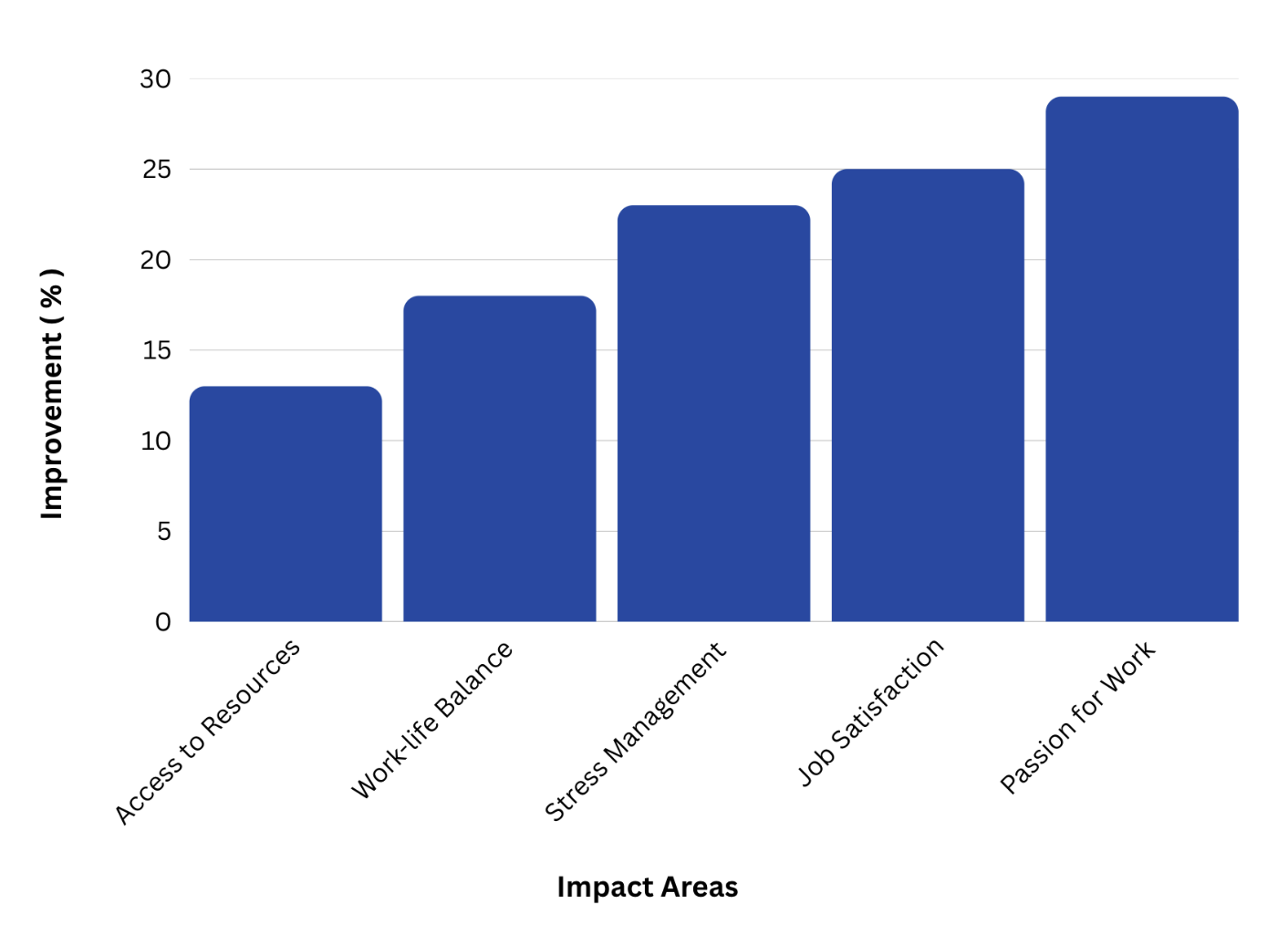
These results highlight an important finding: AI is changing the nature of work while also improving operational efficiency. However, help by itself is no longer enough as dependence on AI grows.Whether assistive AI provides value is no longer a question.
Why assistance without autonomy can’t keep up with the complex nature of today’s enterprises is the question.
Limitations of Assistive AI
The purpose of assistive AI systems is to enhance human decision-making, not to take its place. They offer advice, ideas, or material, but they don’t take any strict action.
Typical limitations consist of:
- Human dependency at scale: Human evaluation, approval, and execution are still necessary for every insight.
- Decision delay: When action is postponed, valuable advice loses its impact.
- Contextual separation: Assistive technologies function independently of other workflows and systems.
- Inconsistent results: Under stress, exhaustion, and complicated human judgment shifts.
- Reactive implementation: AI draws attention to problems, but people only act when they become visible.
Decisions are guided by assistive AI. They are not owned by it. Assistance without autonomy becomes a limitation as company complexity rises.
Current Realities in Enterprise Operations
Today’s enterprise work is characterized more by continuous decision processes than by tasks.
Key realities include:
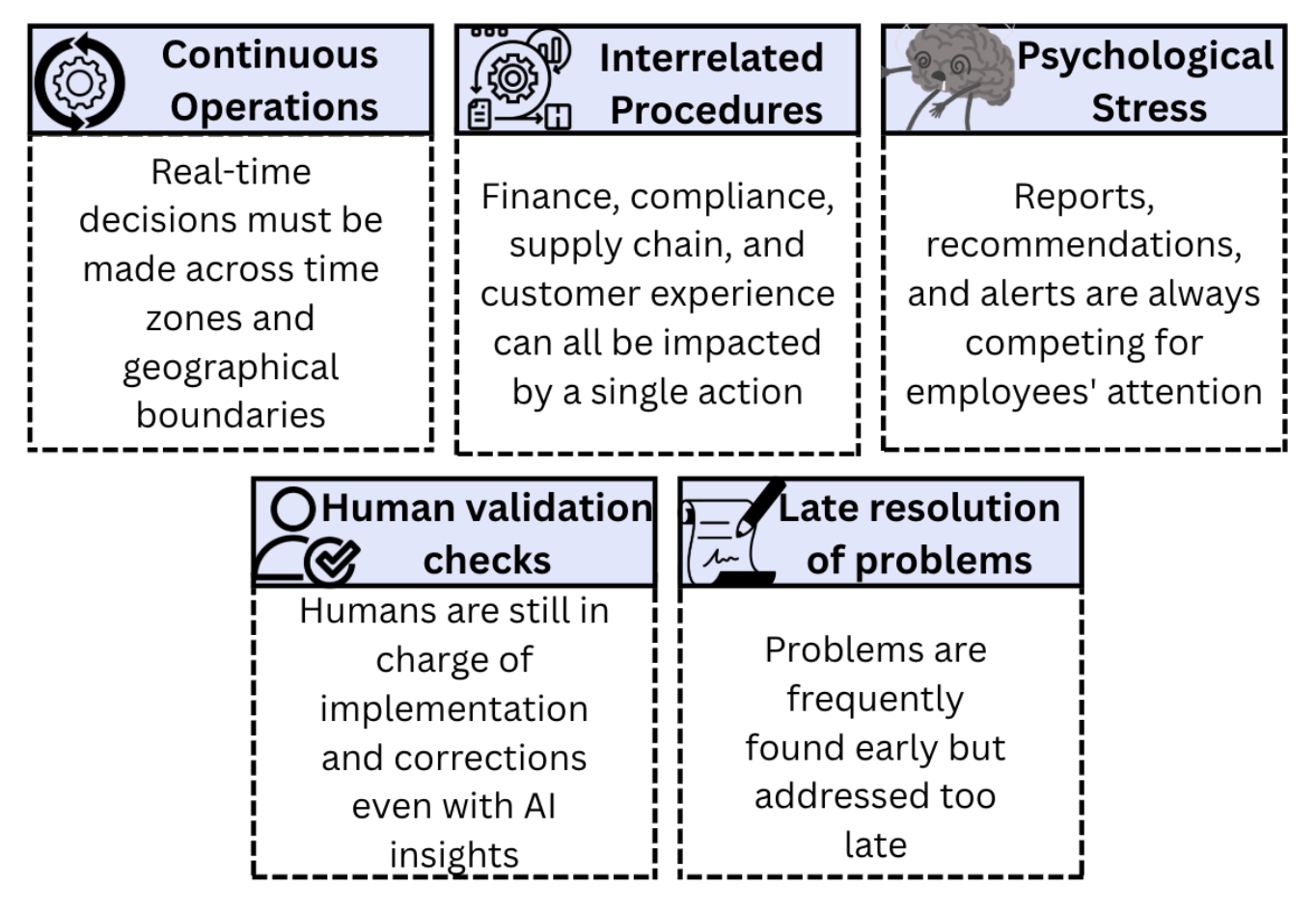
These facts reveal an essential gap: While assistive AI can offer guidance, it is unable to handle complexity at the corporate level.
Key Challenges Enterprises Face Today
The shift from assistive AI to autonomous AI raises a number of difficulties.
Some of the more important ones are:
- Responsibility and trust: enterprises need to have faith in AI systems to make responsible judgments and provide an explanation.
- Data availability and reliability: To function safely, autonomous systems need high-quality, well-governed data.
- Older system interaction: AI’s capacity to act beyond workflows is limited by older infrastructures.
- Management and control: Boundaries, rules, and escalation procedures must be established by enterprises.
- Cultural obstacles: Even when results increase, teams may find it difficult to give up control to computers.
These difficulties highlight an important fact: autonomous AI is an operational shift rather than only a technical advancement.
How Autonomous AI Changes the Game
Enterprise work is now performed rather than assisted by autonomous AI.
Autonomous systems evaluate opportunities, choose the best course of action, and execute it within established limits rather than stopping at ideas. Without waiting for human input, they function continually, adapting to new data and results. Among the main benefits are:
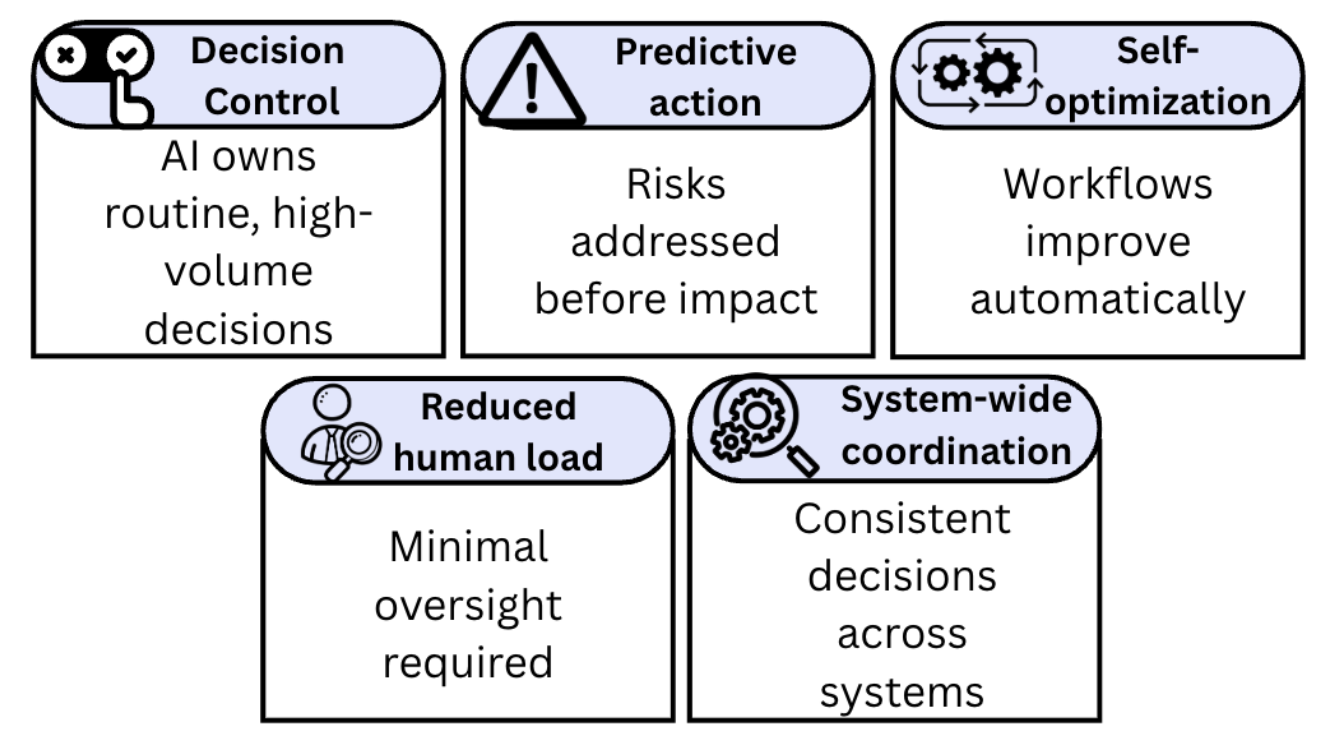
This represents an important shift. AI now actively manages enterprise work rather than just supporting it.
Benefits of Autonomous AI Systems
Enterprises that use autonomous AI make decisions more quickly and consistently.
- Effective risk reduction
- Adaptive functions that don’t require maintenance
- Huge decrease in the amount of manual labor
- Increased operational flexibility and reduced expenses
Autonomous AI increases human focus rather than taking away human control.
Why It Matters
- Decisions made by enterprises frequently exceed human capabilities.
- Small problems become huge failures when response is delayed.
- Operational scale causes manual oversight to collapse.
- Businesses that are reactive lag behind those that are adaptable.
- Instead of constant supervision, humans should concentrate on strategy.
Autonomy is no longer a choice. For businesses to survive, it is crucial.
How Autonomous AI Works in Enterprise Operations
A complete intelligence loop defines the way autonomous enterprise systems operate:
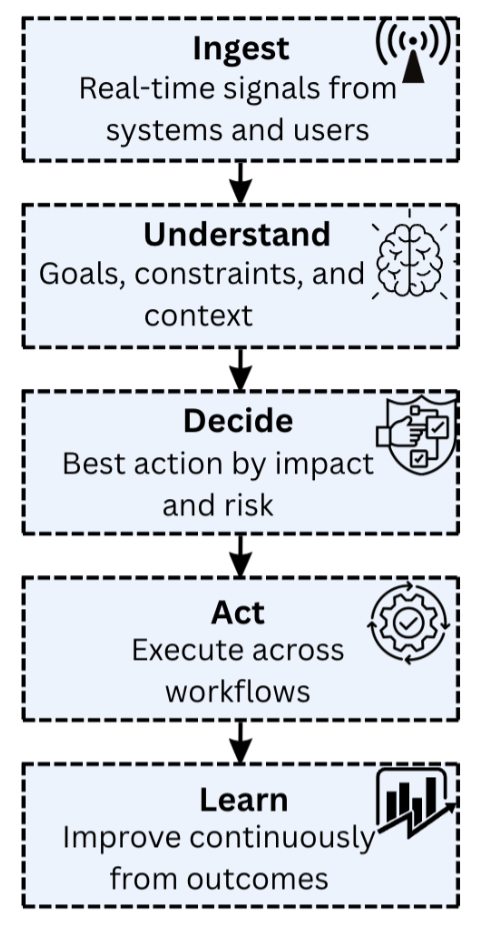
These systems increase understanding, speed, and durability over time. They manage the work rather than just carrying it out.
Looking Ahead: The Future of Enterprise Work
Systems that act, think, and develop on their own are the key to the future of enterprise operations. AI will move on from helping employees to managing operational intelligence throughout the enterprise as complexity and speed continue to increase.
Autonomous systems are going to predict problems, plan responses, and maintain stability on a large scale.Collaboration and creativity will continue to benefit from assistive AI. Effectiveness in high-impact, high-speed situations will be defined by autonomy.
At Valiance Solutions, we think enterprises that go from assistive intelligence to autonomous systems will be at the center of operations in the future.
Our AI solutions make it possible for:
- Independent decision-making within defined limits
- Error management and predicted risks
- Coordination of actions among systems
- Continuous improvement and learning
- Performance that is scalable, reliable, and clear
Systems that just provide assistance find it difficult to function in complex situations. Businesses require autonomous systems that can understand, make decisions, and take action.
References
https://www.heliossolutions.co/blog/how-autonomous-ai-is-rewriting-the-future-of-enterprise-wor
k/
https://www.revinfotech.com/blog/ai-agents/
https://www.recodesolutions.com/from-assistants-to-agents-the-evolution-of-ai-in-enterprise-ope
rations-2/
https://www.stack-ai.com/blog/enterprise-ai-agents-the-evolution-of-ai
https://vofoxsolutions.com/how-ai-agents-are-transforming-business-operations
https://www.expresscomputer.in/guest-blogs/the-rise-of-autonomous-enterprises-how-robotics-ai
-and-automation-are-reshaping-the-workforce-of-tomorrow/119405/
https://www.tredence.com/blog/adaptive-ai