
A gas leak at an oil well doesn’t always begin with an explosion; it often starts quietly.
In June 2025, at ONGC’s wells inAssam,
(https://www.ndtv.com/india-news/gas-leak-continues-for-7-days-himanta-sarma-says-ongc-response-inadequate-8702586 ) what began as a leak continued for days, raising serious concerns about delayed detection and limited real-time visibility. By the time the situation escalated, the challenge was no longer just stopping the leak, but understanding when it started and how it spread.
This is the reality of petrochemical operations.
Facilities operate across vast, interconnected environments where pipelines, storage units, and processing systems function simultaneously. In such conditions, early warning signs like a minor gas release, pressure fluctuation, or unexpected activity near a wellhead can be difficult to detect in time.
The problem is not just the presence of monitoring systems, but the ability to interpret what is happening, when it is happening. And in high-risk environments, that delay can make all the difference.
This is where the petrochemical industry is facing a critical shift from simply monitoring operations to truly understanding them in real time.
The Growing Safety Challenge in Petrochemical Facilities
Across the globe, petrochemical plants form the backbone of industries ranging from energy and plastics to fertilizers and pharmaceuticals. These facilities handle flammable gases, volatile liquids, and hazardous compounds at massive scales.
Recent data from 2025 highlights how critical these risks remain.
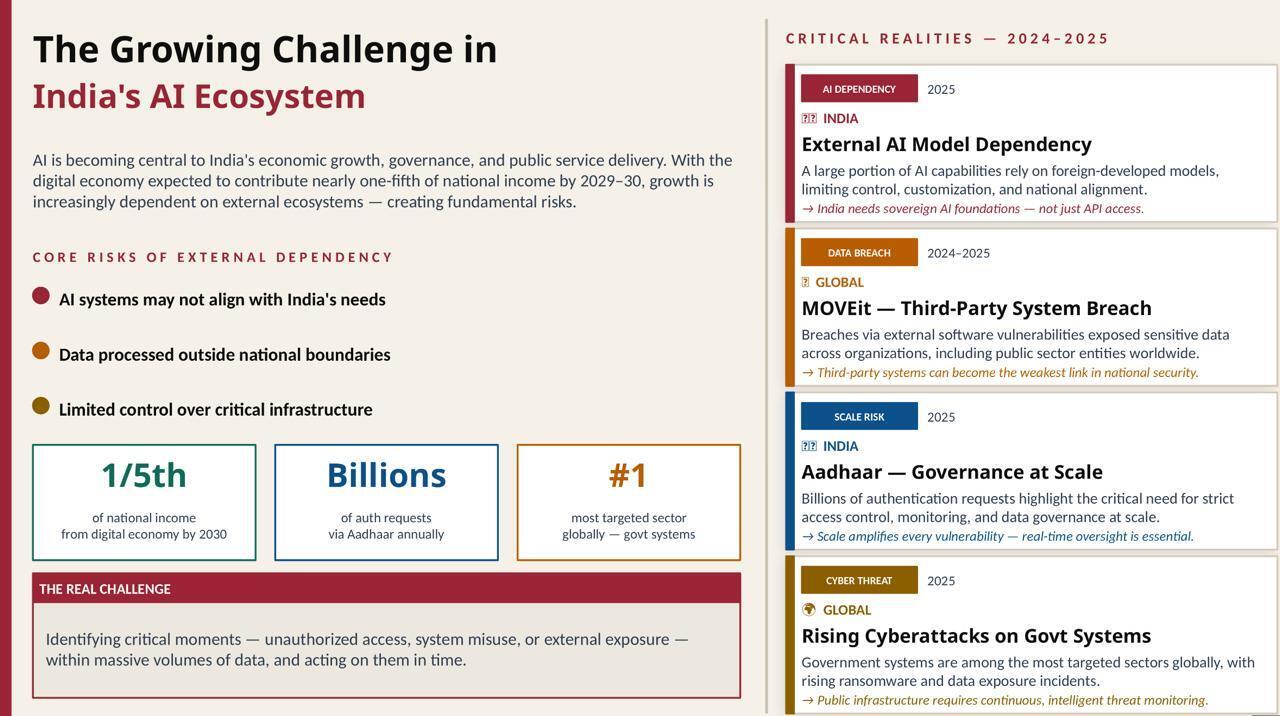
Across India, Nigeria, and the United States, multiple high-impact industrial incidents have been reported, many resulting in significant fatalities and driven by fire, explosion, and maintenance-related failures.
Some of the most serious incidents include:
These are not isolated cases.
Industry trends show that oil, gas, and petrochemical workers continue to face fatality rates up to seven times higher than other sectors. Workers are frequently exposed to hazardous substances such as hydrogen sulfide (H₂S), benzene, toluene, xylene, and volatile organic compounds (VOCs), which pose serious health and safety risks. Rapid industrial expansion, especially in developing regions, has often outpaced safety oversight.
The scale of operations adds to the complexity. Even with safety regulations in place, maintaining complete visibility across such large, interconnected environments is difficult.
The real challenge is identifying critical moments within massive volumes of data such as early signs of leaks, unusual movement near pipelines, unauthorized access to restricted zones, or unsafe worker behavior and acting on them in time.
Limitations of Traditional Monitoring in Petrochemical Plants
Most petrochemical facilities rely on a combination of control systems, IoT-enabled sensors, human supervision, and conventional surveillance. While these systems are essential, they come with limitations in complex industrial environments.
Common challenges include:
- Fragmented visibility across pipelines and units
A pressure drop in one pipeline, activity near a valve in another zone, and a delayed alarm in the control room are often not connected in real time making root cause identification difficult. - Late detection of leaks and vapor releases
Small hydrocarbon or gas leaks (like H₂S or VOCs) may not be visually obvious and are often identified only after sensors trigger alarms or conditions worsen. - Over-reliance on alarms and thresholds
Traditional systems depend heavily on predefined limits, meaning risks are detected only after parameters cross critical thresholds not during early deviations. - Manual monitoring gaps in high-risk zones
Areas like tank farms, flare stacks, and transfer corridors cannot be continuously observed by personnel, increasing the chances of unnoticed activity. - Limited context during incident investigation
While data is available from sensors and cameras, correlating “what happened, where, and why” across systems remains slow and complex.
In simple terms, traditional monitoring helps record incidents but not always prevent them early enough.
Current Realities Around Petrochemical Safety
Despite advancements in technology and strict compliance standards, petrochemical facilities continue to face real-world operational challenges:
- Complex, interconnected operations: A small issue in one unit can quickly impact multiple interconnected processes.
- High-risk materials under extreme conditions: Flammable and toxic substances increase the consequences of even minor errors.
- Large operational footprints: Facilities spread across vast areas make continuous monitoring difficult.
- Frequent human interaction in critical zones: Manual inspections and operations increase the chances of oversight or unsafe behavior.
- Limited real-time interpretation of visual data: Cameras capture everything, but identifying what actually matters remains a challenge.
These realities create a familiar imbalance: massive data availability, but limited real-time insight.
Key Challenges Without Intelligent Monitoring
When petrochemical facilities rely only on traditional systems, several issues persist:
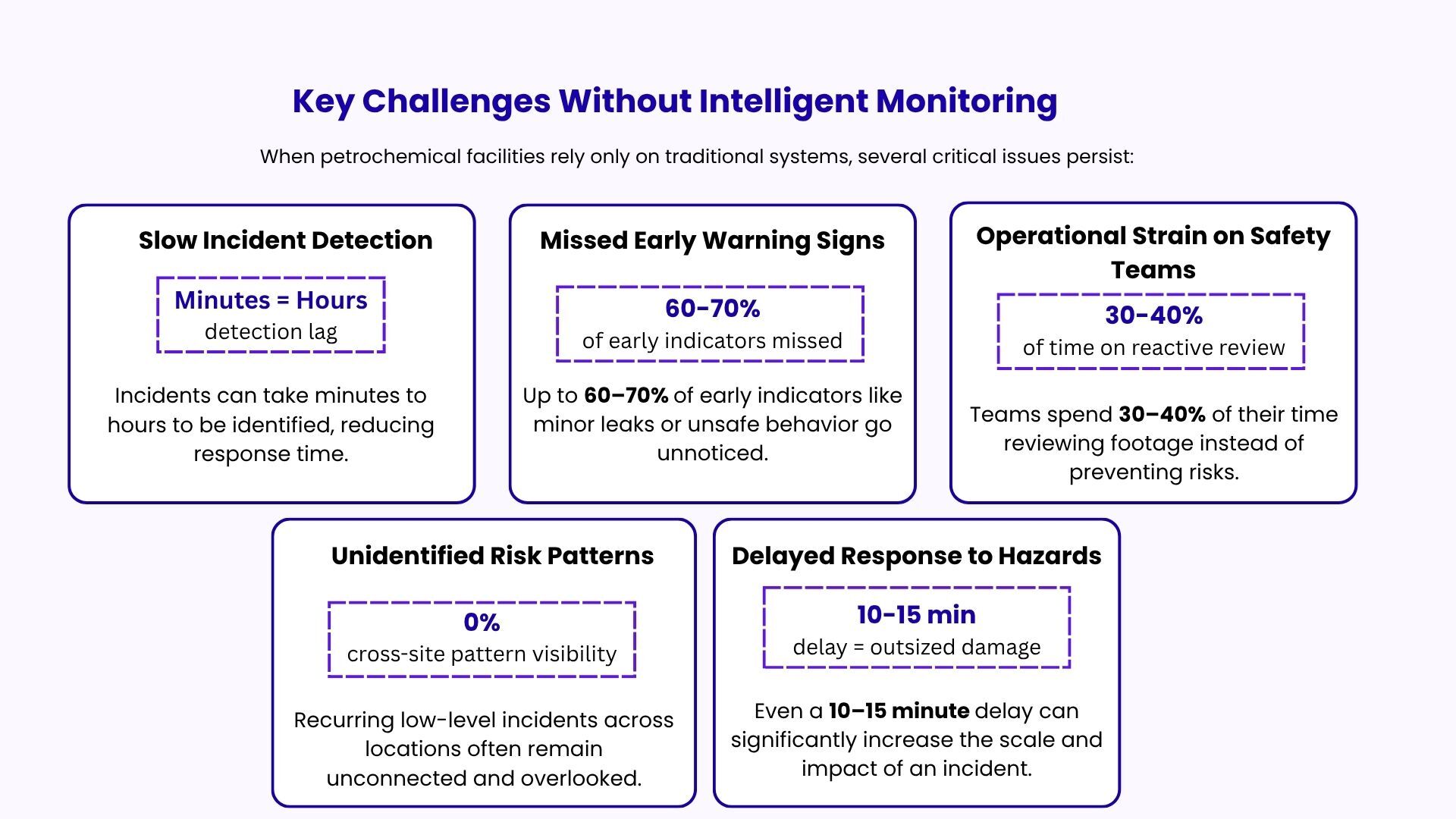
These challenges are pushing the industry to move toward more proactive and intelligent monitoring approaches.
How Video Intelligence Supports Petrochemical Facility Safety
What petrochemical facilities need today is not more data but better interpretation of the data they already have.
Video intelligence changes how organizations understand activity across petrochemical facilities. Instead of simply observing camera feeds, intelligent systems analyze movement, behavior, and operational patterns across large, high-risk environments in real time.
Instead of asking,
“Did someone notice activity near the storage tank?”
Organizations can begin asking smarter questions:
“Which pipeline corridor is showing unusual movement today?”
“Has anyone accessed restricted processing zones after operating hours?”
“Was there activity near the transfer line before the pressure drop was detected?”
This shift enables several important improvements:
- Faster incident identification: Critical events can be quickly detected within large volumes of visual data, reducing the time taken to understand what went wrong.
- Early warning signals: Subtle indicators like minor leaks, unusual movement near pipelines, or unsafe behavior can be identified before they escalate into major incidents.
- Continuous monitoring of high-risk zones: Sensitive areas such as storage tanks, processing units, and transfer corridors are monitored consistently without relying only on human supervision.
- Improved detection of unauthorized or unsafe activity: Access to restricted zones and unsafe practices around hazardous infrastructure can be identified in real time.
- Enhanced situational awareness across operations: Teams gain a clearer, connected view of activities across the facility, enabling faster and more informed decision-making.
This approach reflects a broader shift in petrochemical safety moving from delayed incident investigation to earlier detection and faster response.
Where Intelligent Monitoring Matters in Petrochemical Facilities
High-risk areas in petrochemical plants demand constant visibility:
- Pipeline networks and transfer corridors
- Tank farms and storage zones
- Loading and unloading terminals
- High-pressure processing units
- Flare systems and waste areas
- Perimeter and access control zones
Even a few seconds of missed activity here can lead to serious risks.
This is where video intelligence becomes critical enabling faster risk detection, early warning signs, and better visibility across operations.
How Intelligent Monitoring Systems Work
In a typical system, several processes work together to analyze visual environments.
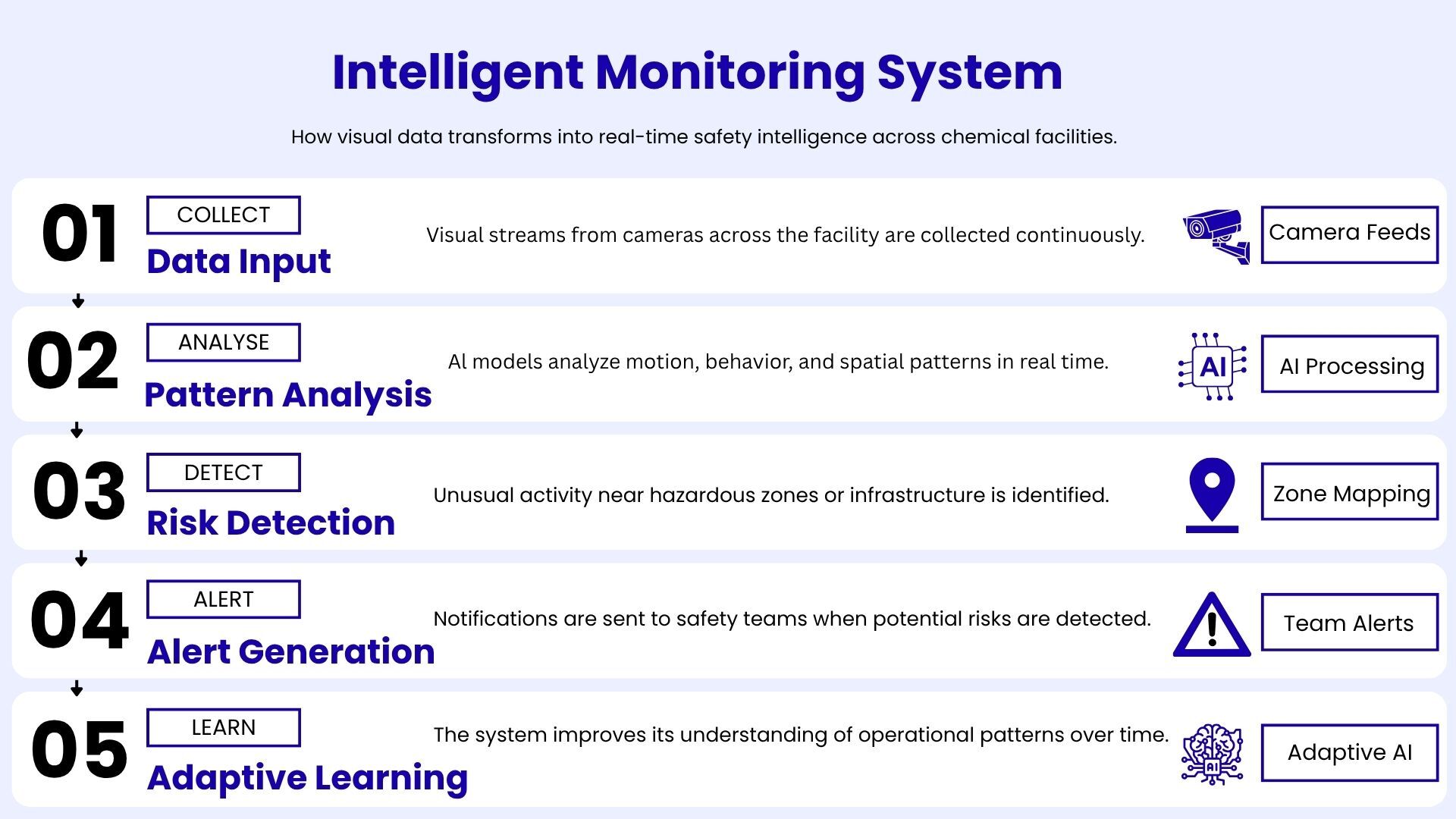
Result: Observe, Understand, Prevent Earlier
The Future of Safety in Petrochemical Operations
As petrochemical facilities continue to expand, safety strategies are evolving.
Future systems will focus on:
- Real-time understanding of complex operations
- Early detection of leaks, risks, and unsafe behavior
- Integration of video intelligence with sensors and control systems
- Scalable monitoring across large industrial environments
The goal is clear: Move from delayed reaction to early awareness.
By transforming visual data into actionable insights, video intelligence is helping petrochemical organizations rethink safety making operations more proactive, efficient, and secure.