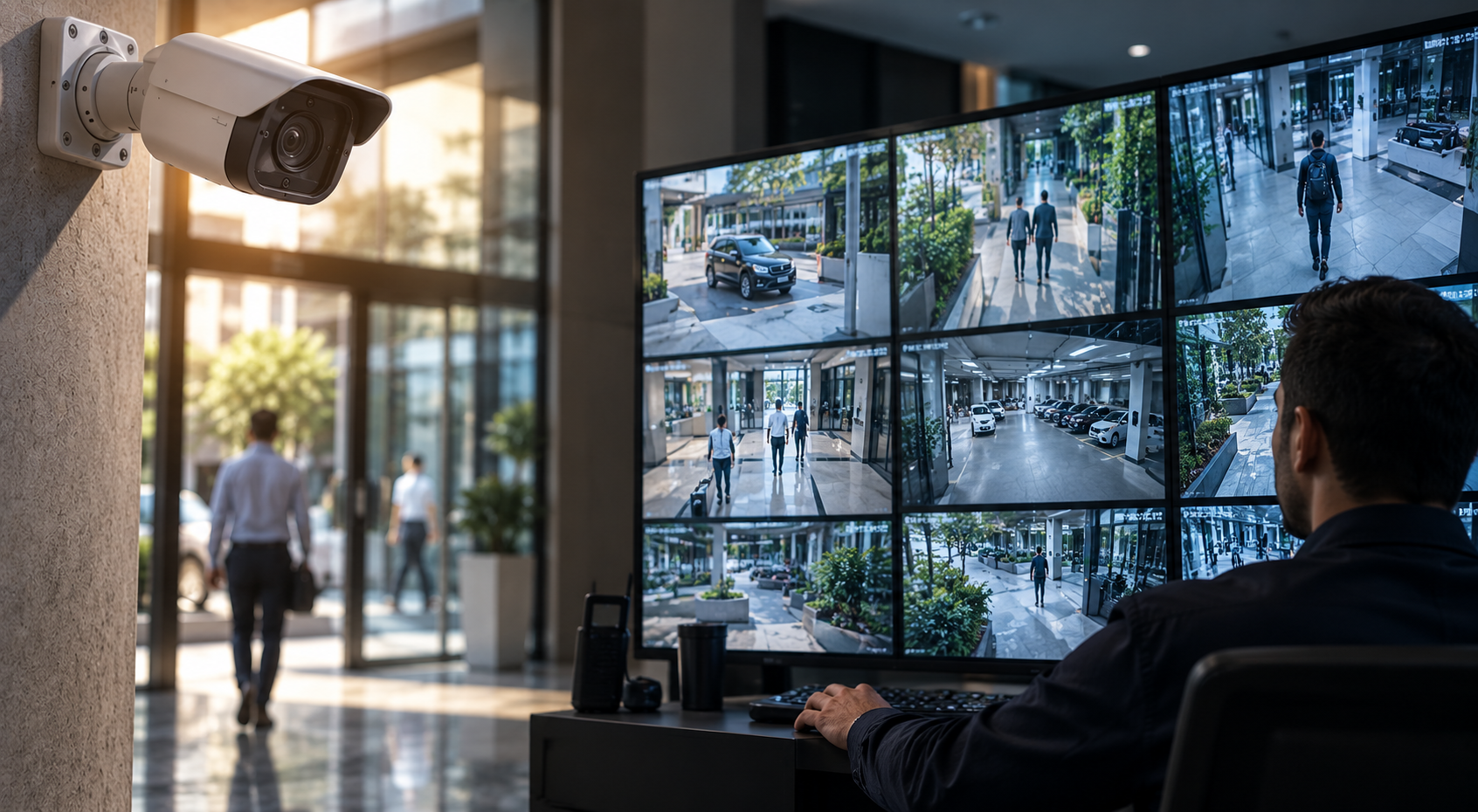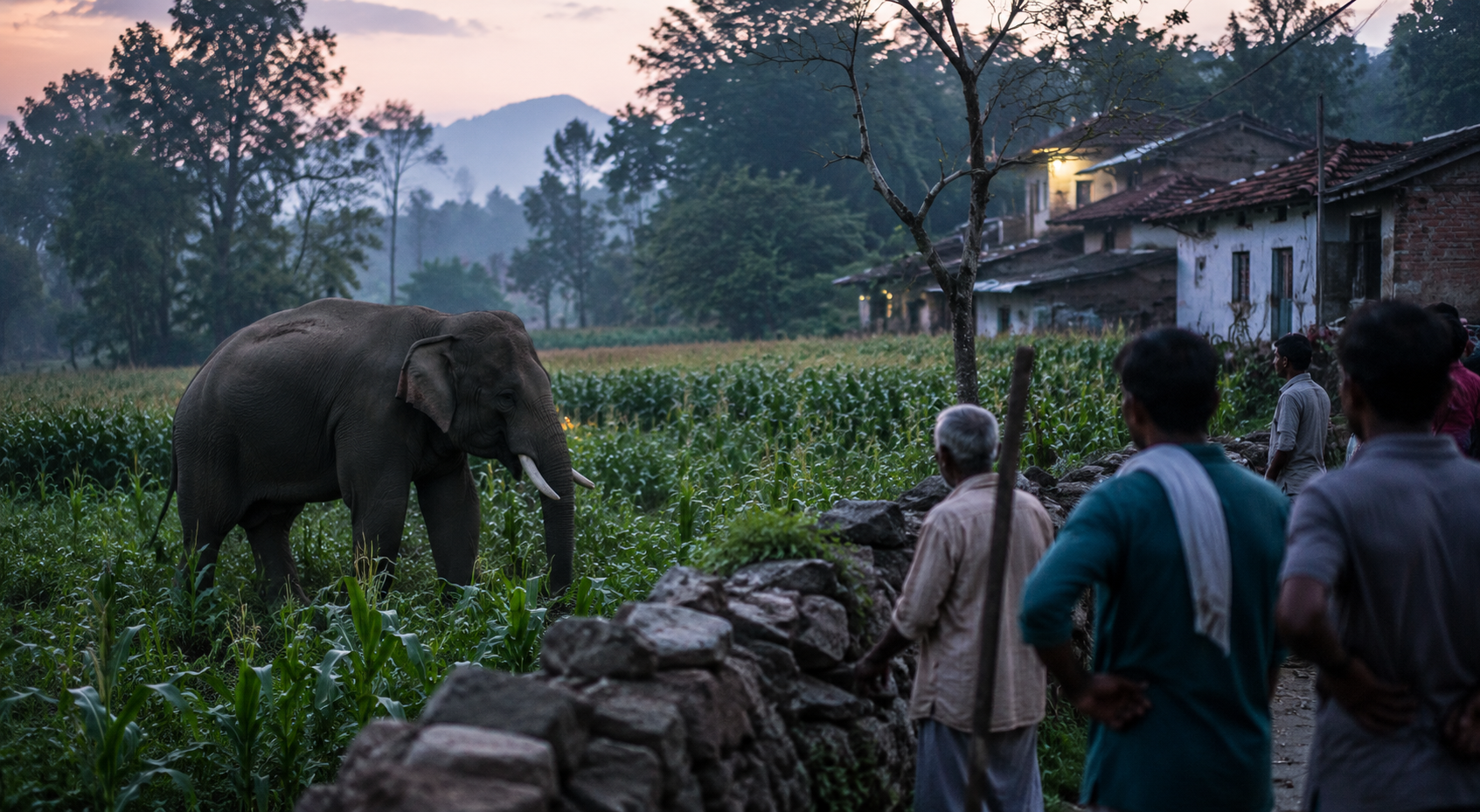
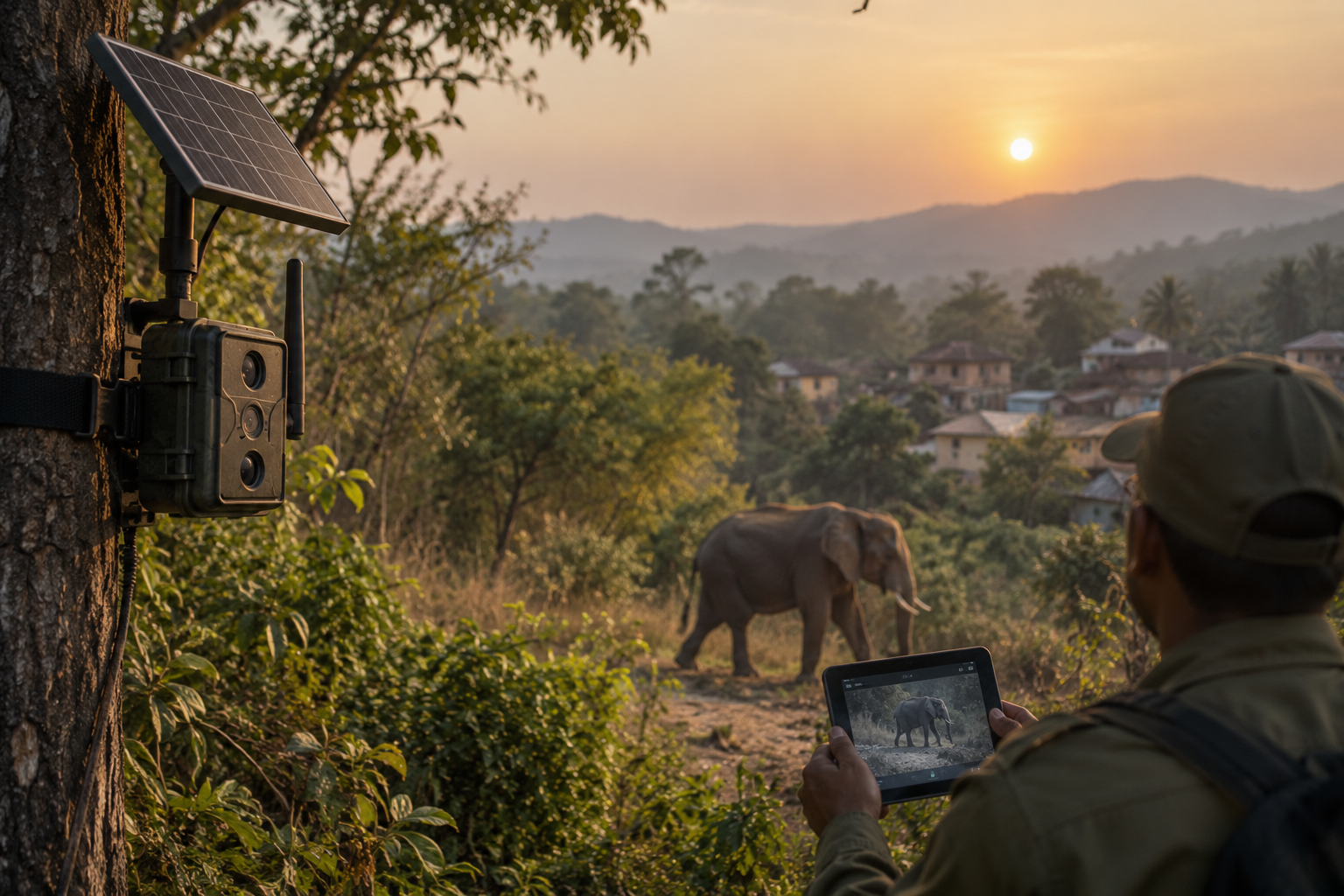
Human-wildlife conflict is getting harder to manage as forests, farms, roads, and villages sit closer together than ever. A leopard slips into a village at night. An elephant wanders into farmland. A tiger moves toward a livestock enclosure. These moments put people and animals at risk in equal measure and by the time anyone notices, the animal has often already left the area or, worse, the encounter has already happened.
The real challenge isn’t confirming that wildlife was present. It’s knowing when an animal is moving toward a high-risk area in time to act not the next morning, but within minutes.
Traditional camera traps are valuable for research, but most still depend on someone manually reviewing footage after it’s captured. That’s useful for building a long-term record. It’s far less useful when a field team needs an alert within seconds of a leopard entering a village boundary.
This is the gap AI in wildlife monitoring is built to close. Computer vision can watch camera feeds continuously, identify wildlife, tell animals apart from people, and fire an alert the moment a defined condition is met. Paired with edge AI, mobile alerts, and solar-powered field hardware, it gives conservation teams a genuinely proactive tool instead of a purely reactive record.
At Valiance Solutions, this is the problem Wildlife EYE & IQ is built to solve an integrated monitoring platform that combines real-time detection with wildlife analytics, helping forest departments and conservation teams detect movement, understand activity patterns, and respond before an encounter turns into an incident.
What Is Human-Wildlife Conflict?
Human-wildlife conflict occurs whenever the movement or needs of people and wild animals collide in ways that put one or both at risk. It shows up in several forms: elephants raiding crops, leopards moving close to homes, tigers approaching livestock, or people entering forest areas for farming, grazing, or daily work.
The cost runs in both directions. People face injury, loss of life, crop and livestock damage, and disruption to daily life. Wildlife pays too repeated conflict often ends in animals being injured, captured, relocated, or killed, while placing long-term strain on conservation teams and local communities.
The goal was never to remove wildlife from human landscapes. It’s to reduce dangerous encounters and support safer coexistence. (For a deeper look at the root causes and broader impact of this conflict across India, see our related post: Understanding Human-Animal Conflict: Main Causes, Impacts, and Solutions.)
Why Traditional Wildlife Monitoring Has Limits
Camera traps, patrols, radio tracking, and manual image review have served conservation well for decades, and they still matter. The problem surfaces when data volume grows or a situation demands an immediate response.
Picture a camera capturing a leopard at 2 a.m. If someone reviews that image the next morning, it’s a useful data point about leopard activity but it arrives too late to warn anyone who was near that location at 2 a.m. That’s the gap between detection and action, and it’s exactly what AI is designed to close.
Instead of using cameras purely as evidence-collection tools, an AI-based system treats them as an active monitoring layer that can:
- Monitor an area continuously
- Detect movement in real time
- Analyze the captured image or video
- Classify the detected object
- Check it against a defined risk category
- Trigger an alert
- Route that alert to the right response team
That shift from passive recording to active monitoring is what turns wildlife surveillance into wildlife intelligence.
How AI and Computer Vision Help With Wildlife Monitoring
Computer vision, the branch of AI that lets machines interpret images and video, can be trained to recognize specific species tigers, leopards, bears, elephants, or whatever a given deployment needs and to flag human movement in zones where unauthorized entry adds its own risk.
A camera that simply records an animal is useful for the archive. A camera that detects the animal, classifies it, checks whether it’s inside a high-risk zone, and alerts the right people in near real time is useful for preventing the next incident. That distinction is the entire value proposition of AI-powered monitoring.
A typical workflow looks like this:
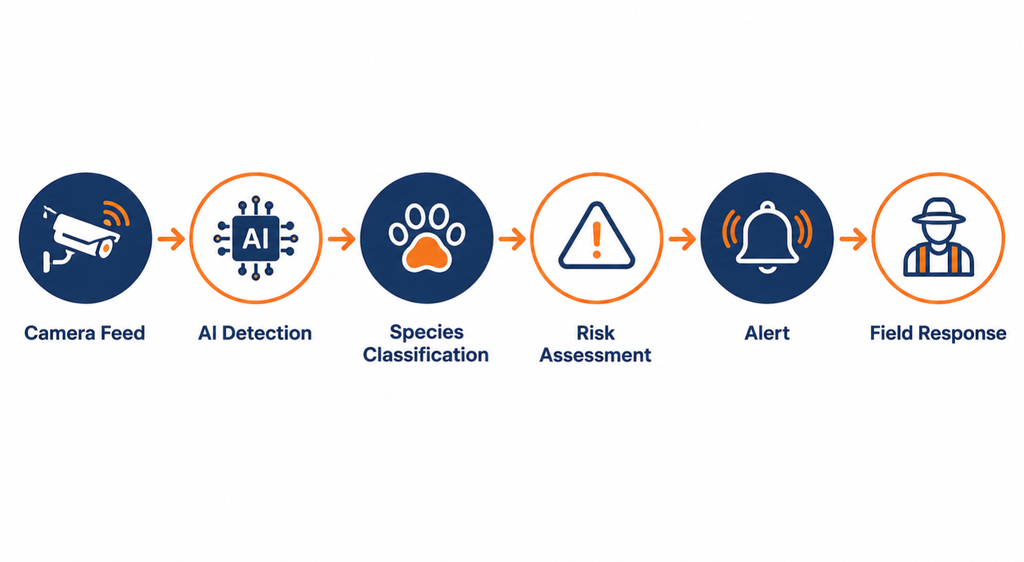
The exact configuration depends on the deployment. A forest boundary may only need species detection. A village bordering a forest usually needs animal detection plus human-intrusion detection. A research-focused conservation project may prioritize individual animal identification and territory mapping over real-time alerting.
How AI Helps Prevent Human-Wildlife Conflict, Step by Step
Consider a village on a forest boundary. A leopard moves toward it after dark. An AI-enabled camera detects the animal, a computer vision model classifies it, and because the location falls inside a defined high-risk zone the system triggers an alert to forest officials and local response teams, who act according to their own protocols.
The whole sequence happens in a fraction of the time a footage-review workflow would take. That speed is the single biggest lever AI brings to conflict prevention not replacing human judgment, but giving people the information early enough to use it.
Wildlife EYE & IQ: Detection and Intelligence, Connected
Valiance approaches this problem through two connected capabilities. Wildlife EYE handles real-time detection and alerting. Wildlife IQ handles the data, analysis, and intelligence layer on top of it. Together, they take a conservation team from isolated sightings to a working picture of wildlife activity over time.
Real-Time Detection, in About Three Seconds
Timing is everything in conflict prevention a warning that arrives after the fact has limited value. Wildlife EYE is built for real-time detection and alerting, and Valiance reports a detection-to-alert time of roughly three seconds across its deployments. The system watches defined areas continuously and pushes an alert the moment it identifies relevant movement. What happens next still depends on the local response plan, the species involved, and the people on the ground AI supplies the signal, people make the field decision.
Edge AI for Areas With Limited Connectivity
Most wildlife deployments happen where internet access is unreliable, which makes cloud-only processing impractical. Wildlife EYE supports on-device inference, running classification locally rather than depending on a constant connection back to a data center. That cuts both connectivity dependence and the volume of data that needs to move out of remote locations a meaningful advantage anywhere near a forest boundary.
Solar and Off-Grid Deployment
Power is often as big a constraint as connectivity. Wildlife EYE supports solar and off-grid installation, which means monitoring hardware can go up near forest boundaries, wildlife corridors, villages, farms, and conflict hotspots without waiting on grid infrastructure. The technology has to work where the risk actually is, and that makes deployment design as important as the model itself.
Virtual Walls: A Digital Boundary Where a Physical One Isn’t Practical
A physical fence around a forest boundary usually isn’t feasible. A Virtual Wall an AI-defined perimeter solves the same problem digitally: when wildlife movement crosses a configured boundary, the system triggers an alert. It’s a practical fit for villages, farms, and roads where wildlife movement creates a genuine safety risk, and the objective stays simple catch the movement before it becomes an incident.
Beyond Detection: Wildlife Analytics and Individual Animal ID
Species detection is only the first layer of wildlife intelligence. Conservation teams also need to know where an animal was seen, how often, whether territories overlap, and which zones see repeated conflict. A single image answers one question; a structured dataset built from thousands of images answers many.
Wildlife IQ is built for that scale. Valiance reports the platform can process 200,000–300,000 (two to three lakh) images per day in its camera-trap-to-analytics workflow, turning what would be months of manual review into a structured, searchable wildlife database.
It also supports individual tiger identification using stripe-pattern recognition, connecting each sighting to historical activity and territorial data so a team doesn’t just know a tiger was present, but which tiger, and what its movement history looks like. The same underlying approach extends to territory mapping and movement analysis for tigers, leopards, and other species where suitable image data exists.
Human Intrusion Detection
Conflict runs in both directions people enter wildlife areas as often as wildlife enters human ones, and unauthorized activity near sensitive forest zones creates risk on both sides. Wildlife EYE detects human movement alongside wildlife, giving forest teams one camera infrastructure that covers both halves of the conflict picture.
Real-World Deployments
Field results are the real test of any monitoring system. Valiance reports Wildlife EYE & IQ deployed across more than 410 locations in four Indian states, generating over 11,000 verified alerts since 2023.
At Tadoba Andhari Tiger Reserve in Maharashtra, Valiance deployed Wildlife EYE in high-risk villages around the Mul area, combining computer vision detection with multilingual alerts for forest staff and residents. Reported outcomes in that deployment include an 87% reduction in cattle kills, a 90% reduction in crop damage in certain zones, and zero human casualties since deployment.
In Chandrapur, Valiance deployed Wildlife EYE as an AI-powered Virtual Wall with real-time video analytics and multilingual alerts across 13 forest-fringe villages.
Results like these are specific to their local conditions and shouldn’t be read as a guarantee for every deployment but they show what’s achievable when the technology, the terrain, and the local response process are properly matched.
Wildlife hotspots also aren’t fixed. Valiance supports mobile Wildlife EYE units that can be relocated as activity patterns shift, giving field teams flexibility instead of treating every camera as permanent infrastructure.
Key Benefits of AI in Wildlife Monitoring
- Faster detection: continuous analysis instead of waiting on manual review
- Faster alerts: automated notifications reach field teams within seconds of detection
- 24/7 monitoring: day and night, without fatigue
- Less manual review: computer vision handles the bulk of image classification
- Better wildlife intelligence: historical data reveals movement, territory, and repeat-conflict patterns
- Remote-ready deployment: edge AI and solar power support locations with no infrastructure
- Stronger field coordination: alerts connect directly to rangers and response teams
- Scalability: one platform can cover multiple sites and roll historical data into one system
Why AI Alone Can’t Solve Human-Wildlife Conflict
It’s worth being direct about the limits here. A camera doesn’t replace a trained ranger. An alert doesn’t replace a field response plan. A computer vision model doesn’t replace habitat management. Real conflict mitigation still needs conservation practice, community participation, trained response teams, and local knowledge working alongside the technology AI improves visibility and shortens the gap between detection and response, but people still make the call on what action is safe.
Challenges Worth Planning For
- Difficult lighting: night, rain, fog, and dense vegetation all test model accuracy; validate against real field conditions, not just clean daylight footage
- Look-alike objects: a branch, a person, and an animal can look similar in a single frame, which is why training and validation quality matters
- Unreliable connectivity: a core reason edge AI exists in the first place
- Power availability: solar and low-energy hardware address this directly
- Data volume: long-term deployments generate huge image archives that need real data management, not just storage
- Response readiness: even a three-second alert is only as useful as the team and process behind it
Questions to Ask Before Deploying
Before choosing a platform, a forest department or conservation organization should be clear on:
- What needs detecting? Species alone, human intrusion, individual animal ID, or full wildlife intelligence?
- Where will it run? Location drives camera choice, power design, and connectivity architecture.
- How fast does an alert need to be? A research deployment and a village safety system have very different requirements.
- What happens after the alert fires? There needs to be a defined response workflow on the other end.
- How will it run without reliable power or internet? Solar and edge processing may be non-negotiable.
- How will the data be stored and analyzed over time? Long-term monitoring needs more than a stream of individual alerts.
The Future of AI-Powered Wildlife Monitoring
Camera networks will keep growing, and manual review won’t scale with them. The next generation of systems will get better at individual animal identification, movement and territory mapping, repeat-conflict-zone detection, and connecting disparate data sources into one intelligence layer. The strongest platforms won’t just collect more images they’ll turn those images into decisions.
Conclusion
Human-wildlife conflict is an environmental, social, and economic challenge, not a purely technical one but technology can close the information gap that so often separates wildlife movement from human response. Computer vision identifies animals. Edge AI keeps that detection running in remote, connectivity-poor areas. Real-time alerts compress the time between sighting and response. And wildlife analytics turns years of camera-trap data into intelligence conservation teams can actually plan around.
Valiance Solutions applies this through Wildlife EYE & IQ, combining real-time detection with wildlife analytics across deployments spanning remote forest boundaries, high-risk villages, wildlife corridors, and shifting conflict hotspots. The goal was never to replace people or existing conservation methods it’s to give them better information at the right moment, so people and wildlife can share the same landscape more safely.
Want to see how Wildlife EYE & IQ could work for your terrain and species mix? Talk to our team.
Frequently Asked Questions
AI in wildlife monitoring uses computer vision and analytics to process camera images and video, detecting animals, classifying species, tracking movement, identifying individuals, and generating alerts or long-term data.
It analyzes camera feeds and identifies wildlife near high-risk zones. When a relevant animal is detected inside a defined area, the system alerts field teams so they can act according to their own safety procedures.
Yes. Wildlife EYE is built for real-time detection, with Valiance reporting detection-to-alert times of around three seconds across its deployments.
Valiance Solutions’ integrated wildlife monitoring platform. Wildlife EYE handles real-time detection and alerts; Wildlife IQ handles data and analytics.
Yes, Wildlife IQ supports individual tiger identification via stripe-pattern recognition, linking sightings to historical activity and territory data.
Yes, when it’s built for it. Wildlife EYE supports on-device (edge) inference, designed for locations where connectivity is limited or unreliable.
Yes, Wildlife EYE supports solar and off-grid deployment for areas without reliable grid access.
It depends on the model and deployment. Wildlife EYE is designed to identify species like tigers, leopards, bears, elephants, and others relevant to a given environment.
Yes, Wildlife EYE includes human-intrusion detection alongside wildlife detection.
No. It’s one part of a broader strategy that also depends on field response, conservation planning, habitat management, and community involvement.
It processes video closer to where it’s captured, cutting dependence on constant connectivity and enabling faster detection in remote environments.
Valiance combines AI, computer vision, and data engineering in Wildlife EYE & IQ covering real-time detection, edge AI, solar deployment, species classification, and movement intelligence, built and tested across live field deployments in India.